
Composite Insulation Products — Nashik, Maharashtra, India
Filament Wound Cylinders & Tubes
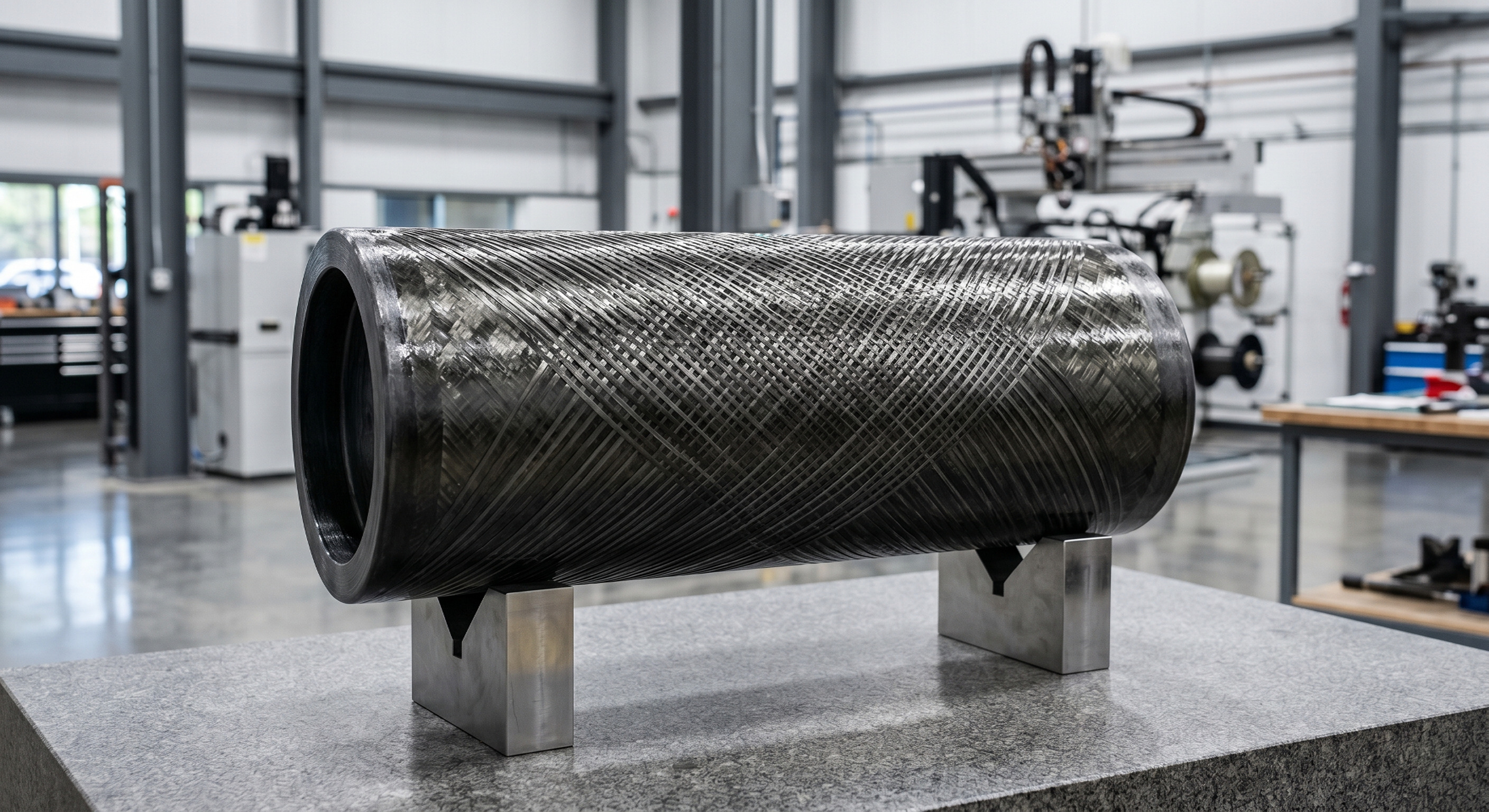
Filament wound products — also called fiberglass wound cylinders, GRP insulation cylinders, or glass-reinforced epoxy tubes — are high-performance composite components made by winding continuous glass fibre strands impregnated with resin under controlled tension onto a rotating mandrel. The result is a structure with a precisely engineered uniform fibre distribution, exceptional strength-to-weight ratio, and superior electrical insulation properties.
At ACC Insulations, we manufacture the full range of filament wound cylinders, structural insulation sleeves, and wound tubes — each engineered to meet the demanding mechanical and electrical requirements of power transformers, switchgear, and high-voltage electrical equipment.

Product Specifications
| Filament Wound Products — Technical Overview | |
|---|---|
| Manufacturing Process | Filament Winding (wet winding / pre-preg winding) |
| Reinforcement | Continuous E-Glass Fibre Rovings / ECR-Glass |
| Resin System | Epoxy Resin / Polyester Resin (as per application) |
| Available Forms | Cylinders, Tubes, Structural Insulation Sleeves, Custom Wound Components |
| Inner Diameter (ID) | As per customer specification (custom) |
| Outer Diameter (OD) | As per customer specification (custom) |
| Wall Thickness | Engineered to required hoop & axial strength targets |
| Length | Custom lengths available |
| Winding Angle | Hoop (90°), Helical (45°–75°), or Combined |
| Thermal Class | Class F (155°C) — Class H (180°C) on request |
| Standards | IEC 60893, IEC 60085, IS specifications, customer technical requirements |
| Applications | Power transformers, Distribution transformers, Switchgear, HV Bushings, Industrial electrical systems |
What Are Filament Products?
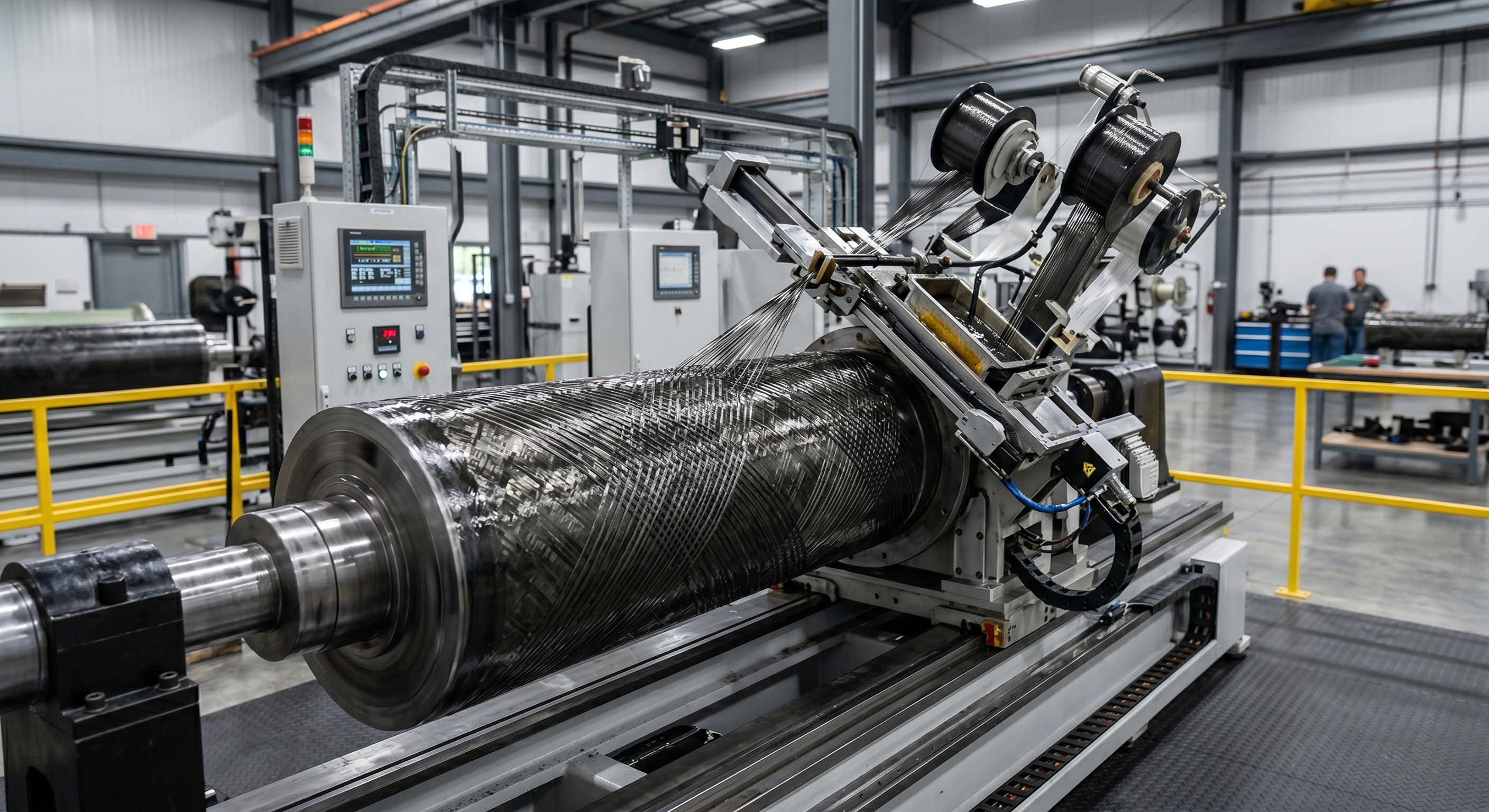
Filament products are structural composite components produced using the filament winding process — one of the most precise and efficient methods for manufacturing high-strength hollow composite structures. In this process, continuous glass fibre rovings are drawn through a resin bath where they are fully impregnated with epoxy or polyester resin, then wound in a carefully controlled pattern onto a heated rotating mandrel.
The winding angle, fibre tension, resin content, and layer count are all precisely controlled by computer-guided winding machinery. Once the required wall thickness is achieved, the wound assembly is cured in a controlled oven to fully cross-link the resin, creating a rigid, dimensionally stable composite cylinder with a continuous fibre structure running through its full wall thickness — giving it fundamentally different (and far superior) mechanical properties compared to any laminate-based tube.
Filament Products We Manufacture
ACC Insulations manufactures a comprehensive range of filament wound composite components, all available in custom dimensions and resin systems:
Filament Wound Cylinders
The core product — precision-wound hollow cylinders used as structural and electrical insulation components in transformer cores and HV equipment. Available in any OD, ID, and length.
Filament Wound Tubes
Thinner-walled composite tubes engineered for conduit, bushing body, and structural sleeve applications where a high strength-to-weight ratio is critical.
Structural Insulation Sleeves
Load-bearing cylindrical insulation sleeves used to isolate and mechanically support conductors and busbars in high-voltage assemblies.
Custom Wound Components
Application-specific filament-wound parts designed from customer drawings. Custom winding angles, multi-layer construction, and machined end profiles available.
Key Electrical & Mechanical Properties
Winding Patterns & What They Control
The winding angle is one of the most critical design parameters in filament winding. It directly determines where the structural strength is concentrated in the finished cylinder wall. ACC Insulations engineers products using the optimal winding pattern — or a combination — for your specific load case:
Hoop Winding
Fibres wound perpendicular to the cylinder axis. Maximises hoop (circumferential) strength — ideal where internal radial pressure or clamping load is the dominant stress. Most transformer cylinders carry at least one hoop layer.
Helical Winding
Fibres wound at an angle to the cylinder axis. Distributes strength in both axial and hoop directions simultaneously. The classic 55° helical pattern achieves equal biaxial strength — critical for pressure vessels and structural cylinders.
Angle Ply Winding
Alternating positive and negative helical layers. Provides excellent torsional and shear strength in addition to axial and hoop performance. Used where the cylinder must resist twisting or complex combined loads.
Combined Pattern
Most engineering applications specify a combination of hoop and helical layers — hoop layers for burst resistance, helical layers for axial load transfer. ACC's engineering team optimises the stack sequence for each application.
Epoxy vs. Polyester Resin — Choosing the Right System
Resin selection has a major impact on the electrical, thermal, and chemical performance of the finished filament wound product. Here is a direct comparison to guide your specification:
| Property | Epoxy Resin | Polyester Resin |
|---|---|---|
| Dielectric Strength | ✓ Very High | High |
| Thermal Class | ✓ Class F (155°C) | Class B (130°C) |
| Mechanical Bond Strength | ✓ Superior adhesion to glass fibre | Good |
| Moisture Resistance | ✓ Excellent | Good |
| Transformer Oil Compatibility | ✓ Fully compatible | Generally compatible |
| Shrinkage During Cure | ✓ Very low (<1%) | Higher (3–7%) |
| Cost | Higher | ✓ More economical |
| Best For | Power transformers, HV bushings, critical insulation | General industrial insulation, lower voltage applications |
For power transformer cylinders and HV bushings, epoxy resin is almost always specified. Polyester resin is the right choice for cost-sensitive general industrial applications where Class B thermal rating is sufficient.
Our Filament Winding Manufacturing Process
Every filament wound product at ACC Insulations is manufactured through a tightly controlled, step-by-step process to ensure consistent dimensional accuracy, uniform fibre distribution, and full compliance with IEC and customer-specific standards:
Glass Fibre Selection & Qualification
High-tensile E-glass or ECR-glass rovings are selected based on required dielectric performance class and tensile strength targets. Incoming material is checked for fibre quality, sizing compatibility, and moisture content before release to production.
Resin Preparation & Viscosity Control
Epoxy or polyester resin is weighed, mixed with hardener and additives in precise ratios. Resin viscosity is measured and adjusted to ensure consistent wet-out of the glass fibre during winding — a critical factor for achieving correct fibre volume fraction and void-free laminate quality.
Mandrel Setup & Controlled Filament Winding
A precision-machined steel or aluminium mandrel is set up with the correct release agent. The fibre feed is routed through the resin bath and onto the mandrel. The winding machine deposits fibre at the programmed angle, speed, and tension — building up the wall in precisely calculated layers until the target wall thickness is reached.
Heat Curing for Structural Consolidation
The wound assembly is transferred to a curing oven where it is processed at specified temperatures and hold times to achieve full resin polymerisation. Proper curing is essential for maximum mechanical strength, dimensional stability, and thermal class performance.
Mandrel Extraction
After curing, the mandrel is carefully extracted from the cured cylinder — leaving a smooth, dimensionally accurate inner bore. The extraction method preserves ID tolerances and avoids any delamination of the inner surface.
Precision Machining & Finishing
OD, ID, length, and end face profiles are machined to customer drawing tolerances using CNC lathes. Surface coating, thread cutting, or special end preparations can be applied as required.
Quality Testing & Dispatch
Each cylinder undergoes dimensional inspection, dielectric proof testing, and visual audit before dispatch. Test certificates and material traceability documentation are provided on request.
Applications of Filament Wound Products
Filament wound cylinders and tubes are used wherever electrical insulation must also carry mechanical load — a combination that conventional paper or pressboard insulation simply cannot achieve at the same level of reliability:
Filament Wound Products vs. Conventional Insulation Cylinders
Understanding exactly how and why filament wound products outperform paper-based, pressboard, and standard laminate tubes helps specify the right material for your application:
| Performance Criterion | Filament Wound Cylinder | Paper / Pressboard Cylinder |
|---|---|---|
| Tensile / Hoop Strength | ✓ 3–5× higher | Lower — susceptible to splitting under clamp load |
| Moisture Absorption | ✓ Very low — closed composite matrix | High — cellulose is hygroscopic |
| Dimensional Stability | ✓ Stable across temperature & humidity | Swells and shrinks with humidity changes |
| Service Life in Oil | ✓ Excellent — resin fully oil-resistant | Degrades — paper oxidises and ages in hot oil |
| Thermal Class | ✓ Class F / H | Class A / B (lower) |
| Machinability | ✓ CNC machined to ±0.1 mm | Limited — prone to tearing |
| Weight | Light (GRP density ~2.0 g/cm³) | Similar |
Quality Control & Standards Compliance
Every filament wound product leaving ACC Insulations' facility has passed a documented multi-stage quality assurance protocol:
- Dimensional inspection — ID, OD, wall thickness, length, and concentricity verified using calibrated instruments
- Dielectric strength testing — withstand voltage testing per IEC 60893 and customer-specified test voltages
- Visual & surface quality audit — inspection for voids, dry fibre spots, delamination, resin-rich zones, or surface cracks
- Mechanical verification — hoop strength or compressive load checked on sample basis as required
- Thermal class confirmation — resin system and cure cycle verified against thermal class declaration
- Material traceability — raw material lot numbers and test certificates retained; documentation supplied on request
Standards compliance: IEC 60893 (thermosetting laminates for electrical purposes), IEC 60085 (thermal classification), IS specifications, and customer-specific engineering requirements.
Customisation & Engineering Support
Every transformer design is different — and so is every filament wound cylinder we produce. ACC Insulations provides complete engineering customisation:
- Custom inner and outer diameters — matched to your exact mandrel or bore requirement
- Custom wall thickness — engineered from calculated hoop and axial load requirements
- Custom lengths — cut or wound to your assembly drawing dimensions
- Application-based resin selection — epoxy for critical HV and oil-immersed applications, polyester for general industrial use
- Winding angle optimisation — hoop, helical, or combined patterns to meet your structural loads
- Precision CNC machining — end faces, steps, flanges, and threads machined to drawing tolerances
Our engineering team collaborates directly with your design or procurement team to deliver the right solution — from prototype to production quantities.
Why Choose ACC Insulations for Filament Products?
Dedicated Manufacturer
We are a specialised insulation manufacturer — not a trader. Every filament wound product is made and tested in our own Nashik facility.
Proven Winding Expertise
Decades of experience in filament winding technology, with deep knowledge of fibre architecture, resin systems, and transformer application requirements.
Custom-to-Drawing
We manufacture to your exact engineering drawings, tolerances, and material specifications — from single prototype pieces to high-volume production runs.
IEC & IS Certified Quality
All filament wound products comply with IEC 60893, IEC 60085, and relevant IS standards. Full test documentation provided with each order.
Reliable Delivery
Controlled production planning and in-house manufacturing ensure consistent lead times — keeping your transformer manufacturing schedule on track.
Technical Support
Our team assists with wall thickness calculation, resin selection, winding angle specification, and IEC compliance documentation for new designs.
Engineering Tools Suite
Calculate exact wall thickness, hoop strength requirements, fibre volume fraction, and dielectric clearance margins for your custom filament wound cylinders using our interactive engineering tools.
Frequently Asked Questions
Filament winding is a composite manufacturing process where continuous glass fibre strands (rovings) are pulled through a resin bath — impregnating them with epoxy or polyester resin — and then wound onto a rotating mandrel in a precise helical or hoop pattern under controlled tension. After winding is complete, the assembly is heat-cured in an oven to fully harden the resin, resulting in a rigid, high-strength composite cylinder. The winding angle, fibre tension, resin ratio, and number of layers are all computer-controlled and can be tailored to meet specific mechanical and electrical performance targets for each application.
In power and distribution transformers, filament wound cylinders serve as winding support and phase insulation cylinders — they form the structural core around which copper windings are wound, provide electrical insulation between LV and HV windings, and carry the mechanical clamping and short-circuit forces generated during operation. Their high hoop strength prevents the cylinder from deforming under winding pressure or short-circuit electromagnetic forces, which is a major failure mode for weaker paper or pressboard cylinders in high-MVA transformers.
Yes — every filament wound cylinder we manufacture is made to order to your exact specifications. We can produce any inner diameter (ID), outer diameter (OD), wall thickness, and length. We also offer custom winding angle patterns (hoop, helical, combined), choice of resin system (epoxy or polyester), and CNC-machined end profiles including flat faces, stepped bores, threaded ends, and flanges. Our minimum order quantity is flexible — we work with both prototype quantities and full production volumes.
Significantly stronger. The continuous glass fibre winding creates an uninterrupted reinforcement structure through the full cylinder wall — giving tensile and hoop strength typically 3–5 times higher than equivalent paper-based pressboard cylinders. Additionally, filament wound cylinders have very low moisture absorption (cellulose-based materials absorb moisture, which degrades their dielectric properties), excellent oil resistance, and far better dimensional stability over the product's service life in hot transformer oil.
Hoop winding winds fibre at 90° (perpendicular) to the cylinder axis — maximising resistance to radial (bursting) loads and clamping forces. Helical winding winds fibre at an angle (typically 45°–75°) to distribute strength across both axial and hoop directions simultaneously. Most transformer cylinders use a combination of both: hoop layers to resist winding pressure and short-circuit radial forces, and helical layers to carry axial loads during short circuits and transport. The optimal combination is determined by the mechanical load analysis for each specific transformer design.
Our filament wound cylinders and tubes comply with IEC 60893 (thermosetting laminates for electrical purposes), IEC 60085 (thermal classification of electrical insulation), relevant IS specifications for transformer insulation materials, and customer-specific engineering requirements. We provide dimensional inspection reports, dielectric test certificates, and raw material traceability documentation with each order on request.
Request a Quote
Get pricing & tech specs within 24 hours