
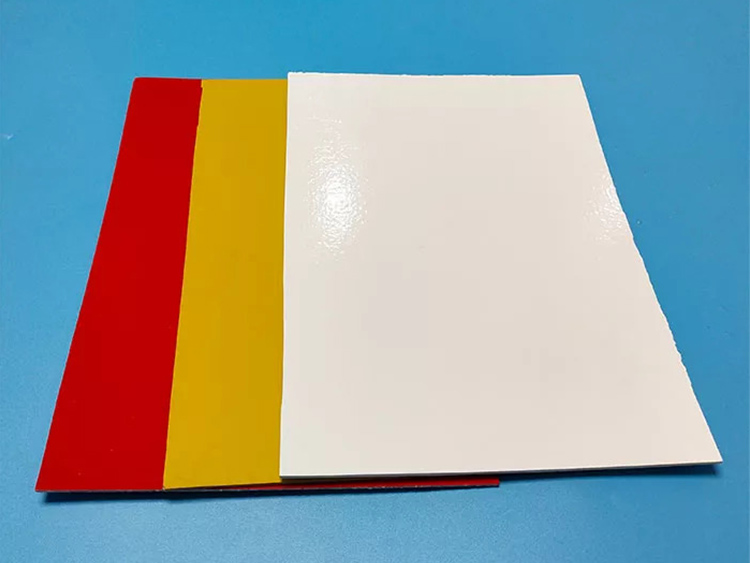
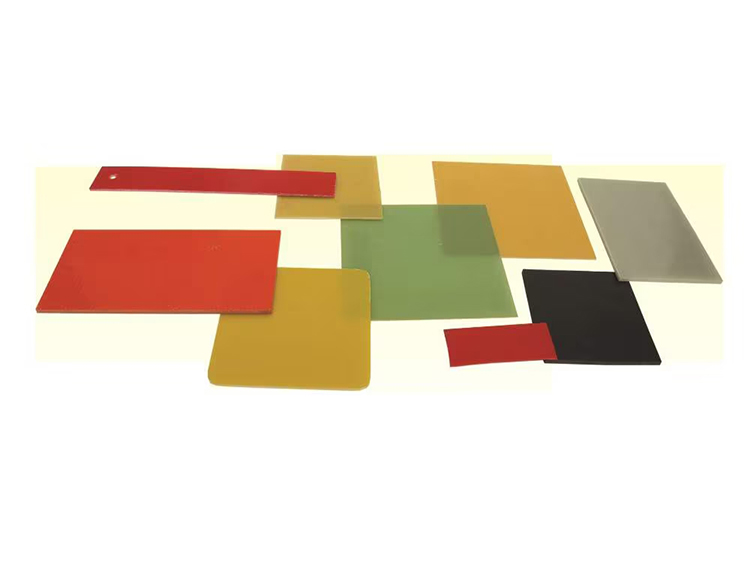
FRP Sheets – Fiber Reinforced Plastic
ACC Insulations manufactures high-performance fiber reinforced plastic sheets components (FRP sheets). Engineered for electrical insulation and structural reinforcement, each sheet combines woven glass fiber mat with polymer resin — producing a composite with exceptional dielectric, mechanical, and thermal properties. Trusted by OEMs, power utilities, and switchgear manufacturers across India.

| Product Specifications | |
|---|---|
| Material | Fiber Reinforced Plastic (FRP) – Glass Fiber + Polymer Resin |
| Thickness (mm) | 0.5 mm to 50 mm |
| Standard Sizes LW (mm) | 1000 × 1000 | 1000 × 1220 | 1220 × 1220 |
| Dielectric Strength | ≥ 14 kV/mm (up to 20 kV/mm) |
| Flame Rating | UL-94 V0 (Self-extinguishing) |
| Resin Options | Polyester | Vinyl Ester | Epoxy |
| Quality Standards | IEC 60893 | IS 13360 | Industry-specific |
| Country of Origin | Made in India (Nashik, Maharashtra) |
What Are FRP Sheets?
FRP sheets — also called fiberglass reinforced plastic sheets, GRP sheets, or glass fibre reinforced polymer panels — consist of high-tensile glass fibre mat embedded in thermoset resin (polyester, vinyl ester, or epoxy). Curing under controlled heat and pressure creates a rigid, anisotropic laminate. Properties vary by resin grade, fibre orientation, and laminate thickness — allowing engineers to specify exact electrical, mechanical, and thermal performance for each application.
Unlike conventional steel or aluminium, FRP is non-conductive, non-magnetic, and corrosion-proof — making it indispensable in high-voltage electrical assemblies and chemically aggressive industrial environments.
Key Technical Properties
≥ 14 kV/mm. Resists voltage breakdown in HV panels, transformers, and busbar systems.
High flexural and tensile strength. Handles structural loads without deformation.
Resists acids, alkalis, and moisture absorption. Performs in humid or corrosive environments.
Maintains dielectric and mechanical properties at elevated operating temperatures.
UL-94 V0 rated. Self-extinguishing. Low smoke emission in fire scenarios.
Up to 75% lighter than steel. Reduces dead load and simplifies installation.
Applications of FRP Sheets
FRP sheets serve demanding electrical, construction, and industrial sectors. Key use-cases:
Electrical Panels & Switchgear
Phase barriers, arc-flash barriers, panel partitions in LT/HT switchboards.
Transformer Insulation
Structural supports, coil formers, and lead insulation in power transformers.
Industrial Enclosures
Control panels, junction boxes, and cable trays in harsh plant environments.
EV & Power Electronics
Battery pack insulation, busbar supports in EV drivetrain assemblies.
Renewable Energy Systems
Inverter housing, solar combiner box insulation, wind turbine components.
Construction & Infrastructure
Roofing panels, cladding, walkway gratings in chemical plants and warehouses.
FRP Sheets vs Conventional Materials
FRP composite sheets outperform metals and traditional insulators on every critical dimension:
| Property | FRP Sheet | Mild Steel | Aluminium | Bakelite |
|---|---|---|---|---|
| Dielectric Insulation | ✔ High | ✘ None | ✘ None | ✔ Medium |
| Corrosion Resistance | ✔ Excellent | ✘ Rusts | ~ Moderate | ✔ Good |
| Weight (relative) | ✔ Light | ✘ Heavy | ~ Medium | ~ Medium |
| Flame Retardancy | ✔ V0 Rated | ~ N/A | ~ N/A | ~ Limited |
| CNC Machinable | ✔ Yes | ~ Slow | ✔ Yes | ~ Brittle |
Manufacturing Process
Full process of FRP sheets components manufacturing
1. Raw Material Selection
E-glass woven mat or chopped strand mat + thermoset resin (polyester / vinyl ester / epoxy) selected per application grade.
2. Resin Impregnation
Glass mat saturated with catalysed resin at controlled viscosity for uniform fibre-resin ratio.
3. Lamination & Compression Moulding
Layers stacked to target thickness, then compression-moulded under precise temperature and pressure to cure resin and consolidate laminate.
4. Post-Cure & Finishing
Controlled post-cure cycle to maximise cross-linking. Surface finishing for dimensional accuracy and appearance.
5. Quality Inspection & Testing
Dielectric strength, thickness, flexural modulus and visual inspection per IEC 60893 / IS 13360 before dispatch.
6. Custom CNC Cutting (Optional)
CNC routing and machining for project-specific profiles, slots, holes, or bevelled edges.
Quality Standards & Certifications
- IEC 60893 – Insulating boards made of thermosetting resins for electrical purposes
- IS 13360 – Indian standard for plastics — methods of testing
- UL-94 V0 – Vertical burn flame resistance classification
- Industry-specific OEM and utility specifications on request
Industries Served
- Electrical Equipment Manufacturers – switchgear, MCCs, control panels
- Power Utilities & Substations – transformer OEMs, distribution companies
- EV & Automotive – battery pack insulators, motor housings
- Renewable Energy – solar, wind, energy storage systems
- Chemical & Process Industries – corrosion-resistant structural panels
- Defence & Rail – lightweight structural and insulating components
Engineering Tools Suite
Calculate exact panel sizing, weight savings, and dielectric strength requirements for FRP sheets using interactive tools.
Frequently Asked Questions
FRP sheets deliver superior strength-to-weight ratio, inherent corrosion resistance, and high dielectric strength. Unlike steel or aluminium, FRP won't rust, needs no grounding, and holds structural integrity in chemical-laden or coastal environments — at up to 75% less weight.
Yes. ACC manufactures FRP sheet components with specialised fire-retardant polyester or vinyl ester resins. All grades meet UL-94 V0 flame resistance classification — self-extinguishing, low smoke, and compliant with stringent electrical safety standards.
Standard thickness: 0.5 mm to 50 mm. Standard sheet sizes: 1000 × 1000 mm, 1000 × 1220 mm, and 1220 × 1220 mm. Custom CNC cutting and machining available for project-specific dimensions and profiles.
High dielectric strength makes FRP essential for phase barriers, switchgear insulation panels, transformer structural supports, busbar supports, and HV protective enclosures. Dielectric strength reaches up to 20 kV/mm depending on grade and thickness.
ACC offers three resin grades — standard polyester for general applications, vinyl ester for superior chemical and moisture resistance, and epoxy for maximum mechanical strength and dielectric performance in critical HV applications.
Yes. All FRP sheets components manufactured by ACC Insulations comply with IEC 60893 (insulating boards for electrical purposes) and relevant IS standards. Certificates and test reports available on request for OEM and utility procurement teams.