
Switchgear & Panel Busbar Insulation — Maharashtra, India
Busbar Insulation Components
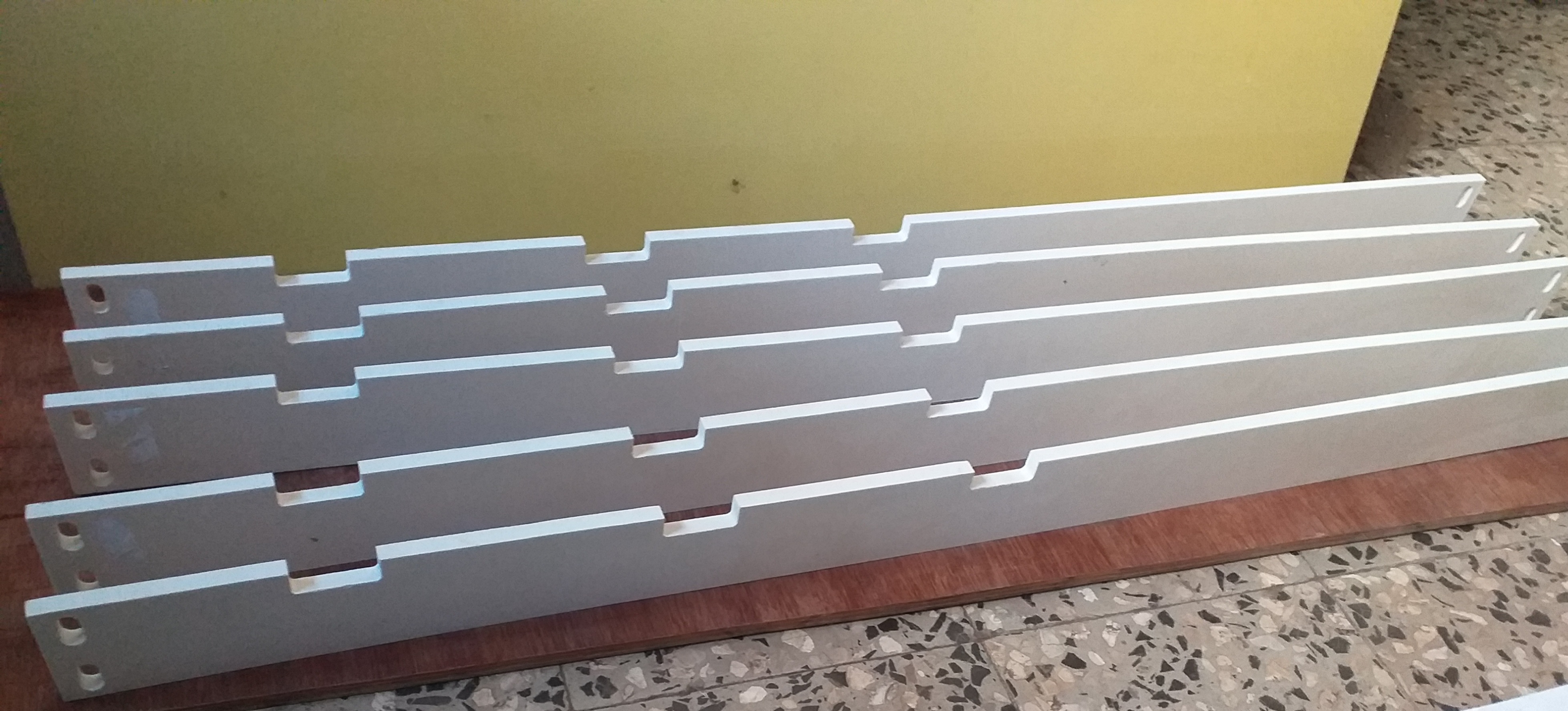
Busbar insulation — also referenced as busbar sleeve insulation, busbar phase barrier, busbar insulation sheet, or busbar conductor covering — covers every insulation component applied to copper or aluminium busbars inside switchgear panels, motor control centres (MCCs), panel boards, and bus ducts. ACC Insulations fabricates and distributes a complete range of busbar insulation components to the exacting dimensional and electrical requirements of panel builders and switchgear OEMs across India.
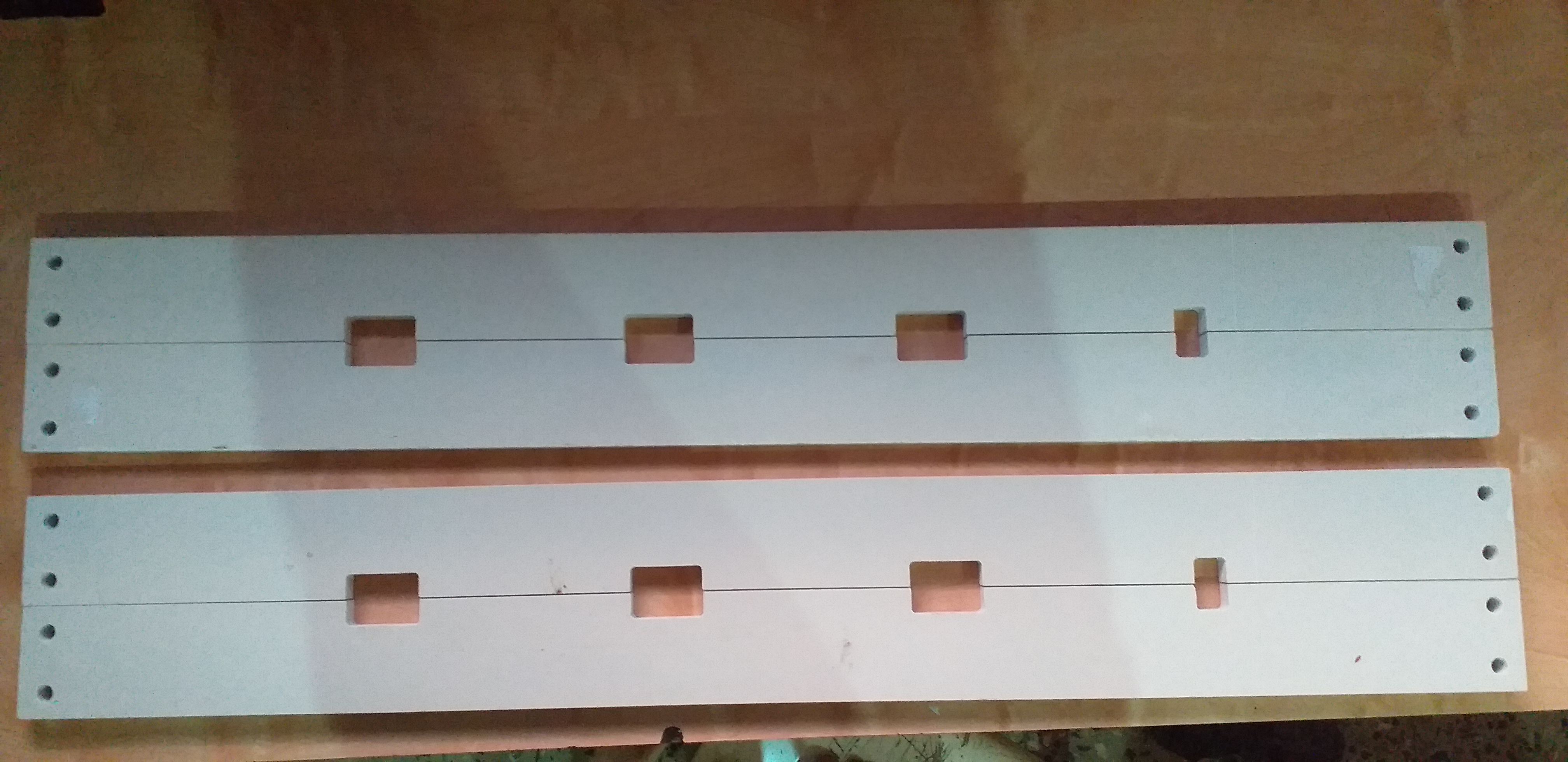
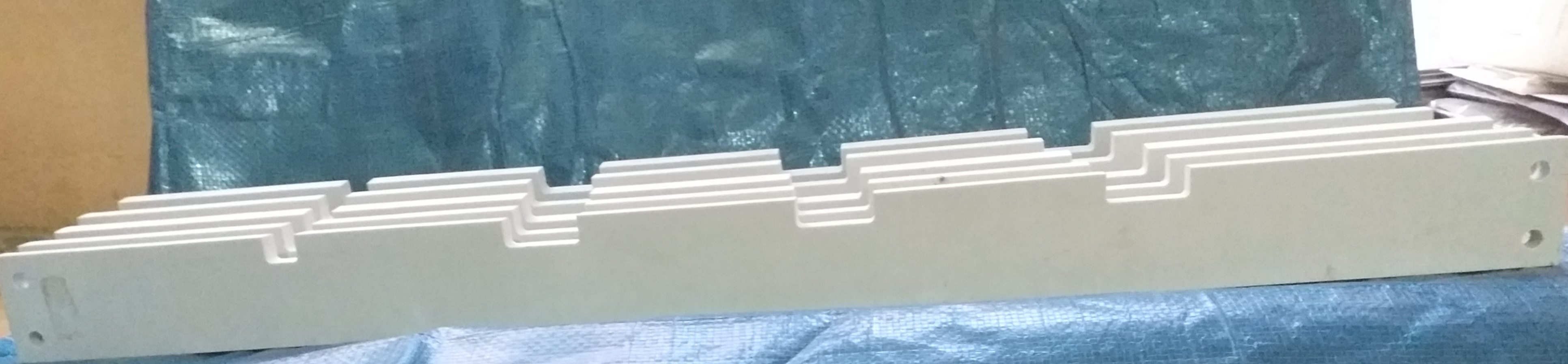
Each component — whether an epoxy glass laminate barrier, PVC sleeve, heat-shrink tube, DMD composite laminate, or fish paper phase separator — fabricated in-house at our Nashik facility and supplied cut-to-size or profiled to OEM drawings.

Busbar Insulation — Full Technical Data
| Busbar Insulation Components — Technical Specifications | |
|---|---|
| Product Category | Busbar Insulation Components — Electrical Grade |
| Primary Material Options | Epoxy Glass Laminate (EPGC 202 / FR4 / G10), Fish Paper (Vulcanised Fibre), DMD Composite Laminate, NMN Laminate, PVC, Heat-Shrink Polyolefin, Fibre Glass Sleeving |
| Voltage Rating | Up to 1100 V AC (LT standard) — HT grades up to 33 kV available on request |
| Thermal Class | Class B (130°C) / Class F (155°C) / Class H (180°C) — grade dependent |
| Dielectric Strength | High — meets IEC 60893, IS 1576, and IEC 61439 creepage & clearance requirements |
| Epoxy Glass Sheet Thickness | 1 mm to 50 mm (standard stock); custom thicknesses available |
| Fish Paper Thickness | 0.25 mm to 3.0 mm (standard stock) |
| Sleeve Types | PVC (clear, red, yellow, blue) · Heat-shrink polyolefin 2:1 and 3:1 · Fibre glass varnished sleeving |
| Fabrication Services | Cut-to-length, CNC routing, punching, slotting, profiling, bending — per OEM drawings |
| Colour Coding | Red / Yellow / Blue (phase) + Black or Green-Yellow (neutral / earth) — standard PVC and heat-shrink |
| Standards | IEC 60893, IEC 60085, IEC 61439, IS 1576, IS 2036 |
| Applications | LT switchgear, MCCs, panel boards, bus ducts, rising mains, distribution boards, control panels, relay panels |
What Busbar Insulation Covers
Busbar insulation refers to all electrical insulation components applied directly to copper or aluminium busbar conductors inside low-voltage and medium-voltage electrical panels. Every live conductor inside a switchgear enclosure requires insulation that simultaneously provides dielectric protection against phase-to-phase and phase-to-earth faults, mechanical support under short-circuit electromagnetic forces, and thermal stability at continuous operating temperatures driven by resistive heating.
Unlike transformer insulation — which operates inside sealed, oil-filled enclosures — busbar insulation functions in open air or confined panel enclosures where it must also resist dust, humidity, vibration, and the risk of accidental contact. Selecting inadequate busbar insulation materials or incorrect thickness for the system voltage class directly increases the probability of arc flash events, panel fires, and personnel injury. ACC Insulations fabricates busbar insulation components that meet IEC 61439 creepage distance and clearance requirements for each application's pollution degree and voltage class.
Busbar Insulation — Layer System
Complete busbar insulation in a switchgear panel typically combines multiple material layers, each serving a distinct engineering function:
Typical Busbar Insulation Stack — Switchgear Panel
Not every layer applies to every installation — material selection depends on voltage class, current rating, and available panel clearances.
Complete Busbar Insulation Material Range
ACC Insulations fabricates and supplies six busbar insulation product types, each targeting a specific function in switchgear and panel assembly:
Epoxy Glass Laminate Barriers & Supports
Rigid phase barriers, busbar support cleats, and inter-phase separator plates fabricated from electrical-grade epoxy glass laminates. High dielectric strength, dimensional stability under thermal cycling, and excellent resistance to arc tracking. Cut, drilled, and routed to OEM drawings.
PVC Busbar Sleeving
Colour-coded PVC tubes pushed over flat or round busbar conductors. Provides dielectric covering and mandatory phase identification per IEC 60445. Supplied in standard bore sizes for 25×3 mm through 100×10 mm flat copper and aluminium busbars. Custom bore sizes and wall thicknesses on request.
Heat-Shrink Busbar Insulation
Dual-wall or single-wall polyolefin heat-shrink tubing contracts uniformly around busbar profiles on application of heat — conforming tightly to bends, joints, and irregular cross-sections where PVC sleeving cannot. Preferred for bus duct conductors, riser busbars, and any installation demanding moisture ingress protection at joints and terminals.
Fish Paper Phase Barriers & Slot Liners
Flexible, tough vulcanised fibre sheet punched and cut into phase barriers, slot liners, and wrap insulation for busbar joints and connection points. Excellent punch-forming characteristics — maintains crease lines without cracking at tight radii. Supplied in standard sheet sizes or pre-punched to customer profiles.
DMD & NMN Composite Laminates
Flexible composite laminates combining polyester film with nonwoven fibre facings. Used as inter-phase liners, busbar slot insulation in motor control centres, and flexible wrap insulation where the conductor changes direction. Class F and Class H grades available for high-temperature applications.
Fibre Glass Insulation Sleeving
Braided fibre glass sleeving with varnish or silicone impregnation for busbar connections at elevated operating temperatures where PVC and standard polyolefin degrade. Suitable for Class H (180°C) and Class C applications in high-ambient switchrooms and furnace control panels.
Key Performance Properties
How Busbar Insulation Protects Switchgear Panels
Each busbar insulation component addresses a specific failure risk in panel assembly. Understanding the engineering purpose of each layer guides correct material and thickness selection:
Conductor Covering — Phase Identification
PVC sleeves and heat-shrink tubing applied to the busbar conductor surface provide the first insulation layer — preventing accidental contact with live conductors during installation and maintenance. Mandatory colour coding (Red, Yellow, Blue for L1/L2/L3; Black or Green-Yellow for Neutral/Earth) per IEC 60445 eliminates mis-connection errors during wiring and commissioning. Fibre glass sleeving replaces PVC in high-temperature zones.
Phase-to-Phase Barrier — Arc Flash Prevention
Rigid epoxy glass laminate barriers positioned between phases provide the creepage and clearance distances specified in IEC 61439 for the panel's rated voltage. Without adequate barriers, ionised air paths between adjacent live phases allow flashover arcs that destroy panels, trip distribution circuits, and injure personnel. Barrier thickness and profile match the voltage class — 1 mm EPGC for LT 415 V systems, heavier grades for 3.3–33 kV medium-voltage panels.
Joint & Bend Insulation — Fish Paper Wrapping
Bolted busbar joints and bend regions cannot accept rigid sleeves — fish paper wrap insulation covers these zones. Vulcanised fibre conforms tightly to complex joint geometries, maintains electrical isolation at the most mechanically stressed busbar locations, and prevents the edge-cutting and abrasion that damages softer PVC sleeving at joint bolt holes and sharp corners.
Slot & MCC Cell Liner — DMD Composite
Motor control centre drawout compartments and plug-in busbar systems route busbars through narrow slots where rigid barriers cannot fit. DMD and NMN composite laminates line these slots — providing flexible, conformable phase insulation that accommodates manufacturing tolerances in cell dimensions while maintaining the required electrical clearance between live conductors and earthed panel steel.
Bus Duct Conductor Support — Epoxy Glass Insulators
In rising mains and feeder bus duct systems, busbars run over long vertical distances with periodic support spacers. These spacers carry the full weight of the conductor plus the electromagnetic impulse loads during short-circuit events. Epoxy glass insulators fabricated from EPGC 202 or G10 laminates combine high compressive strength with excellent dielectric properties — preventing earth faults while mechanically supporting the conductor system.
Applications of Busbar Insulation Components
Busbar Insulation Material Comparison
Selecting the correct busbar insulation material depends on the voltage class, operating temperature, busbar profile, and installation method. This comparison covers all materials fabricated at ACC Insulations:
| Material | Form | Thermal Class | Best For | Flexibility |
|---|---|---|---|---|
| Epoxy Glass Laminate (EPGC 202 / FR4) |
Rigid sheet / profile | Class F / H | Phase barriers, support insulators, bus duct spacers | Rigid |
| Fish Paper (Vulcanised Fibre) |
Flexible sheet | Class A / B | Joint wrap, slot liners, phase barriers — LT panels | Flexible |
| DMD Composite | Flexible laminate | Class F | MCC cell liners, slot insulation, flexible barriers | Flexible |
| NMN Composite | Flexible laminate | Class H | High-temperature slot liners, phase separators | Flexible |
| PVC Sleeve | Tube / sleeve | Class A (70°C max) | Conductor covering & phase ID — standard LT panels | Semi-flexible |
| Heat-Shrink Polyolefin | Shrink tube | Class B / F | Irregular profiles, bends, joints, bus duct conductors | Conforms to profile |
| Fibre Glass Sleeving | Braided sleeve | Class H / C | High-temperature terminals, furnace panels, Class H applications | Flexible |
In-House Fabrication Process
ACC Insulations does not simply distribute raw laminate sheets and sleeving stock — every busbar insulation component undergoes in-house fabrication at our Nashik facility before dispatch, ensuring dimensional accuracy and eliminating rework on the panel builder's production floor:
- Raw material incoming inspection: Every incoming batch of epoxy glass laminate, fish paper, DMD composite, PVC, and heat-shrink tubing checked for thickness, dielectric strength, and certificate compliance before release to fabrication.
- CNC routing and cutting: Epoxy glass laminate barriers, support insulators, and spacer profiles routed to customer drawings on CNC machining equipment — dimensional tolerances to ±0.1 mm on critical dimensions. Eliminates hand-filing and improves repeatability batch to batch.
- Punching and profiling: Fish paper and DMD composite laminates die-punched into slot liners, phase barriers, and wrap blanks at production volume with consistent hole locations and edge quality.
- Sleeve cutting and end-finishing: PVC and heat-shrink sleeves cut to specified lengths with clean square ends. Bundled and labelled by phase colour and bore size for direct use on the panel assembly line.
- Final inspection and packaging: Fabricated components inspected dimensionally before moisture-protected packaging. Dispatch with material test certificates for epoxy glass and composite laminates on request.
IEC 61439 Compliance & Busbar Insulation
IEC 61439 — the governing standard for low-voltage switchgear and controlgear assemblies — mandates minimum creepage distances and clearances between live conductors and earthed metal that vary with rated voltage, pollution degree, and overvoltage category. These requirements directly determine the minimum thickness and profile of every busbar insulation component in an LT panel:
- Clearance (air gap): Minimum air distance between live conductors. Busbar barriers and support insulators must not reduce clearances below IEC 61439 Table 1 minimums — typically 5.5 mm at 415 V, Pollution Degree 3.
- Creepage distance: Minimum tracking path over insulation surfaces. Epoxy glass laminate barriers and fish paper slot liners must provide creepage paths that meet the minimum for the system voltage class and the insulation material's Comparative Tracking Index (CTI).
- Short-circuit withstand: During short-circuit events, busbar conductors carry fault currents that generate massive electromagnetic forces. Epoxy glass support insulators and barriers must withstand these impulse loads without fracture or displacement — a design consideration that influences the laminate grade and barrier cross-section specified for each panel rating.
ACC Insulations' technical team advises panel builders on selecting busbar insulation component grades, thicknesses, and profiles that achieve IEC 61439 compliance for their specific panel voltage rating, pollution degree, and short-circuit rating.
Why Choose ACC Insulations for Busbar Insulation
In-House Fabrication
CNC routed, punched, and cut to your drawings at our Nashik facility — not distributed raw stock. Every component arrives panel-ready, eliminating floor-level rework.
Complete Material Range
Single source for all busbar insulation material types — epoxy glass, fish paper, DMD, NMN, PVC sleeves, heat-shrink, and fibre glass sleeving. No need for multiple suppliers.
IEC & IS Compliant Materials
All laminates and composites sourced with IEC 60893, IS 1576, and IS 2036 process certifications. Material test certificates on request for every batch.
Voltage Class Advisory
Technical team advises on material grade, barrier thickness, and creepage path dimensions to achieve IEC 61439 compliance for each panel voltage and pollution degree class.
Reliable Supply & Fast Turnaround
Stocked materials and dedicated fabrication capacity ensure short lead times aligned with panel builder production schedules across Maharashtra and pan-India.
Custom Profile Support
Busbar profiles vary across panel builders — we fabricate sleeves, barriers, and spacers to your exact busbar cross-section. Submit drawings or a sample component for fabrication.
Insulation Finder & Engineering Tools
Calculate IEC 61439 creepage distances, clearance requirements, and busbar insulation material selection parameters for your panel voltage class and pollution degree using our interactive engineering tools.
Frequently Asked Questions
Switchgear busbar insulation draws on six material families, each serving a different function. Epoxy glass laminates (EPGC 202, FR4, G10) provide rigid phase barriers and support insulators with high dielectric strength and arc resistance. Fish paper (vulcanised fibre) covers joints and bends where rigid components cannot reach. DMD and NMN composite laminates line drawout slots and MCC cell compartments. PVC sleeving covers conductors with mandatory phase colour coding. Heat-shrink polyolefin conforms to irregular profiles and seals joints. Fibre glass sleeving handles high-temperature terminal connections. Material selection depends on the panel voltage class, operating temperature, and busbar profile.
Standard busbar insulation components cover LT systems up to 1100 V AC — the voltage class of the vast majority of switchgear panels, MCCs, and distribution boards. For medium-voltage applications (3.3 kV, 6.6 kV, 11 kV, 33 kV), higher-grade epoxy glass laminates and thicker composite barriers achieve the creepage and clearance distances required by IEC 61439 at the applicable overvoltage category and pollution degree. Contact our team with your voltage class and pollution degree for a grade recommendation.
Yes. All busbar insulation components at ACC Insulations are fabricated to customer-specified dimensions — not sold as off-the-shelf raw sheet stock. Epoxy glass laminate barriers and spacers are CNC routed to your drawings. Fish paper and DMD laminates are die-punched or cut to profile. PVC and heat-shrink sleeves are cut to length with bore and wall thickness matched to your busbar cross-section. Submit OEM drawings, DXF files, or sample components to our technical team for fabrication quotation.
Fish paper — correctly termed vulcanised fibre — is a dense, flexible electrical insulation sheet produced from chemically treated cellulose. Its primary advantages for busbar joint insulation: it punches and cuts cleanly without cracking, conforms tightly around bolt heads and irregular joint surfaces where rigid laminates cannot fit, maintains its shape under clamping pressure without cold-flow, and provides adequate dielectric strength for LT panel applications. It functions as wrap insulation over busbar joint bolts, as slot liners in panel compartments, and as phase barrier inserts in tight inter-phase clearances.
PVC sleeving requires a straight busbar run — it pushes on over the conductor end and cannot be applied after installation or at joints. Heat-shrink polyolefin positions over the busbar and then contracts tightly on application of heat — conforming to flat-bar bends, joint bolt profiles, and conductor transitions. Heat-shrink provides a mechanically tighter fit that resists pull-off, better moisture ingress protection at joints, and maintains contact at higher operating temperatures than standard PVC. PVC remains the standard for straight busbar runs in ambient-temperature LT panels due to lower cost and simpler installation.
Busbar insulation materials comply with IEC 60893 (industrial laminated sheets for electrical purposes), IEC 60085 (thermal classification of electrical insulation), IS 1576 (electrical insulating materials), and IS 2036 (glass fabric reinforced plastic products). Panel-level clearance and creepage requirements derive from IEC 61439 (low-voltage switchgear and controlgear assemblies) — the standard that specifies minimum air gaps and tracking path lengths for each voltage class and pollution degree, directly driving busbar insulation barrier thickness and profile selection.
Yes. Bus duct and rising main systems require several specific busbar insulation components: conductor sleeve insulation (PVC or heat-shrink covering on each phase conductor), phase separator barriers (epoxy glass laminate or DMD composite between conductor phases), and conductor support insulators (EPGC 202 spacers at periodic intervals to mechanically support the conductor run and maintain phase spacing). All three component types are fabricated at ACC Insulations to bus duct OEM drawings or standard cross-section specifications.
Request a Quote
Get pricing & datasheet within 24 hours