
FRP Pultruded Winding Component — Maharashtra, India
Dog Bone Profile (FRP)
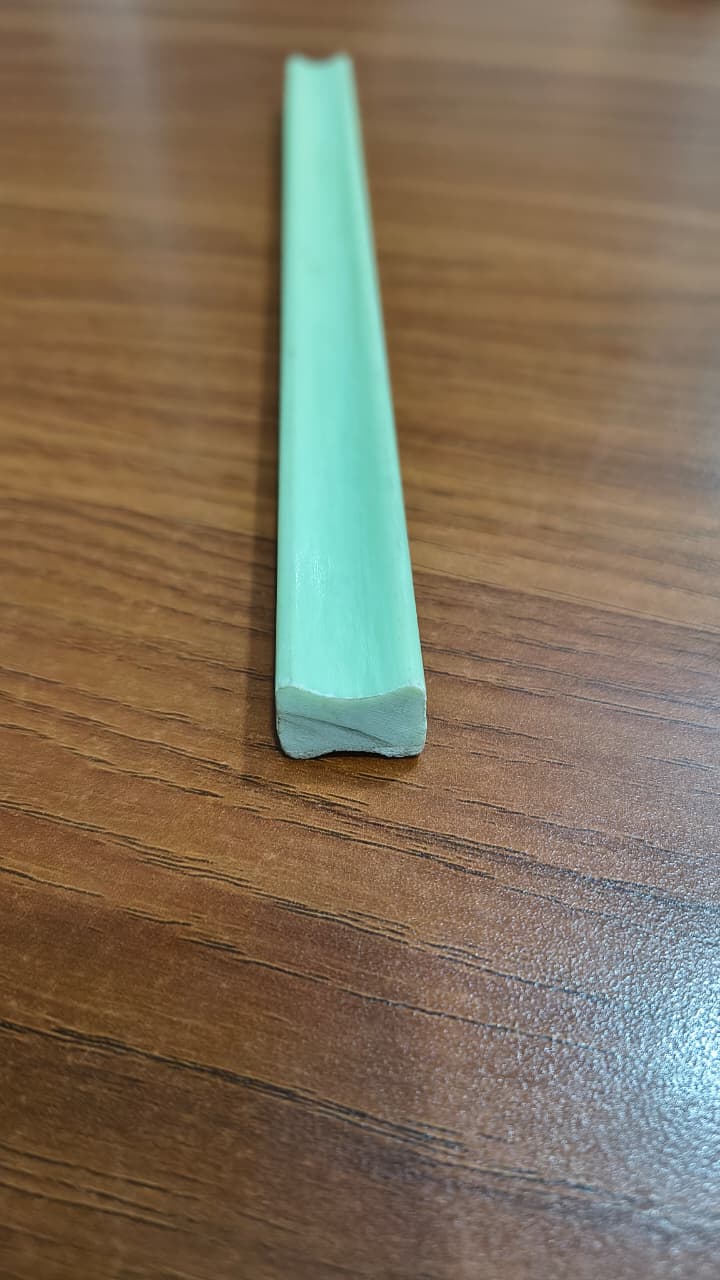
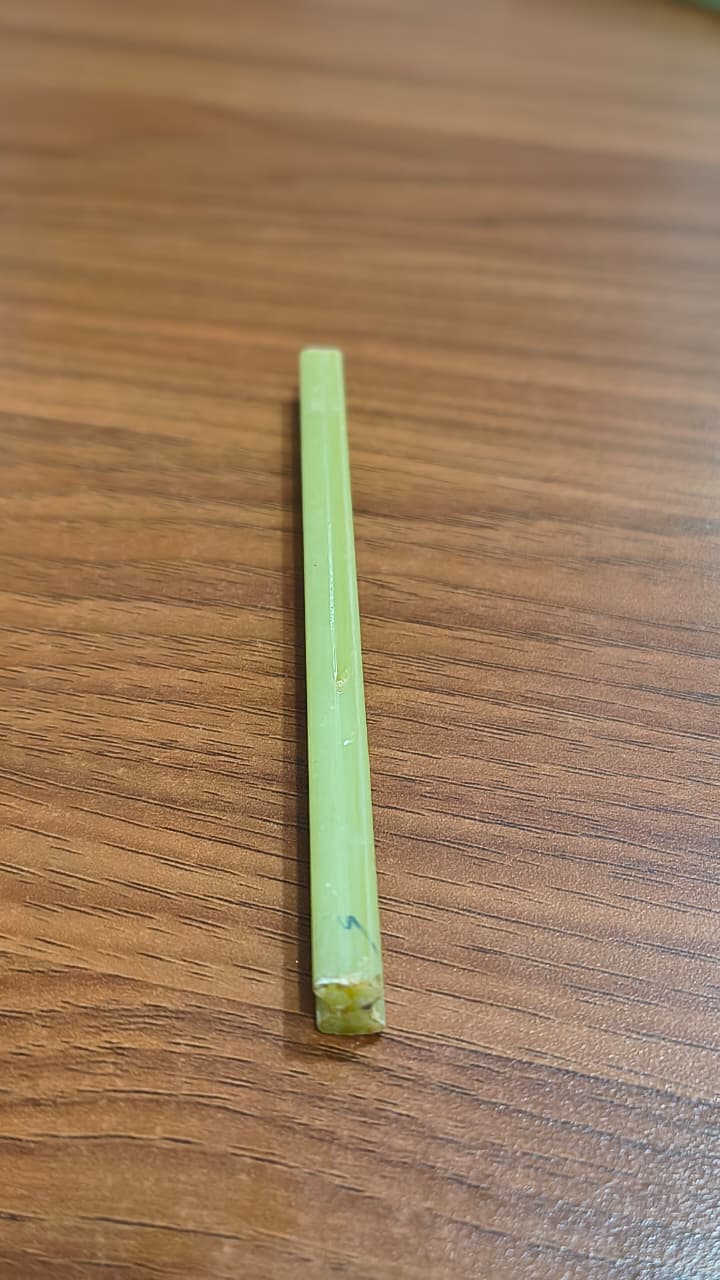
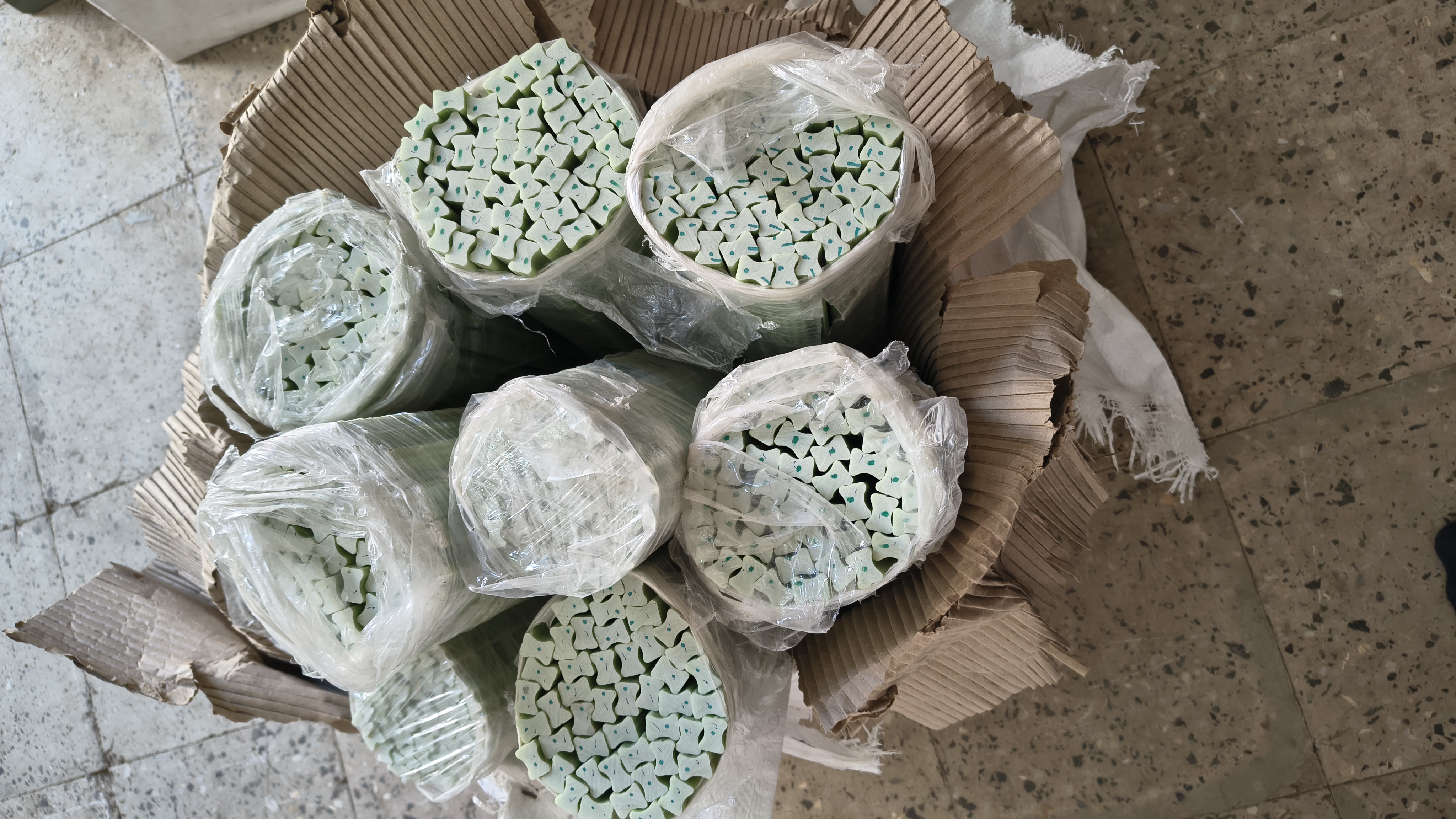
The Dog Bone Profile — also called a dog bone spacer, dog bone bar, duct stick, or I-profile winding spacer — is a precision-pultruded FRP insulation component engineered for coil winding in dry-type transformers, reactors, and high-voltage equipment. Its distinctive double-flanged cross-section — wide at top and bottom, narrow at the web — grips winding conductors in precise position while simultaneously forming controlled air duct channels for transformer cooling.
Manufactured from non-alkali E-glass fibre reinforced epoxy resin by continuous pultrusion, ACC Insulations' dog bone profiles deliver tensile strength exceeding 400 MPa and dielectric strength above 12 kV/mm — in Class F (155°C) and Class H (180°C) thermal ratings. Custom cross-section dimensions are manufactured to OEM transformer design specifications.

Technical Specifications
| Dog Bone Profile (FRP) — Full Technical Data Sheet | |
|---|---|
| Product Name | Dog Bone Profile — FRP Pultruded Winding Spacer |
| Also Known As | Dog bone spacer · Dog bone bar · Duct stick · I-profile · H-profile winding spacer · Double-T profile |
| Reinforcement | Non-alkali E-glass fibre roving — continuous, unidirectional |
| Resin System | Epoxy (Class H) / Polyester (Class F) / Vinyl Ester (chemical-resistant grade) |
| Manufacturing Process | Continuous pultrusion through heated steel die |
| Tensile Strength (longitudinal) | >400 MPa |
| Flexural Strength | >600 MPa |
| Compressive Strength | >400 MPa |
| Shear Strength | >50 MPa |
| Density | 1.75 – 1.95 g/cm³ |
| Dielectric Strength | >12 kV/mm (perpendicular to laminate plane) |
| Volume Resistivity | >10¹⁵ Ω·m |
| Water Absorption | <0.1% (24h immersion) |
| Thermal Class | Class F (155°C) / Class H (180°C) — per IEC 60085 |
| Maximum Temperature Index | Up to 210°C (specialist epoxy grades) |
| Flammability | UL 94 V-0 (self-extinguishing) |
| Partial Discharge | Low — E-glass / epoxy system has intrinsically low PD characteristics |
| Standard Cross-Section Range | Web height: 4–20 mm | Flange width: 6–30 mm | Custom to drawing |
| Standard Lengths | 1 m, 3 m standard | Custom cut lengths to specification |
| Colour | Natural off-white / yellow (epoxy) — other colours to customer specification |
| Applicable Standards | IEC 60893-3, IEC 60085, UL 94, GB/T 5591.3 |
| Rated Voltage Suitability | 35 kV and above (dry-type applications) |
What Is a Dog Bone Profile?
A dog bone profile is a pultruded fibre glass reinforced plastic (FRP) insulation component defined by a specific cross-sectional geometry: two wide, flat flanges connected by a narrower vertical web — an H-shape or double-T shape when viewed end-on — that closely resembles the silhouette of a dog bone, giving the component its industry name. It is also referred to as a duct stick, I-beam spacer, ventilator bar, or winding spacer bar in different manufacturing traditions.
The profile is produced by the continuous pultrusion process — glass fibre rovings are pulled through a liquid resin bath and then through a precision-ground heated steel die, where the resin cures under controlled temperature into a rigid, continuously formed composite profile with a cross-section that exactly mirrors the die geometry. This process produces a profile with fibre aligned longitudinally (along the length), giving the dog bone its characteristic high tensile and flexural strength in the direction of the winding load.
The result is an insulation component that combines three properties simultaneously — properties that no single traditional material delivers together:
- Mechanical rigidity: holds winding conductors in precise dimensional position throughout winding, curing, and service — preventing conductor migration under thermal expansion, short-circuit forces, and vibration
- Electrical insulation: high dielectric strength and volume resistivity provide the inter-layer insulation between winding conductors and between winding sections, replacing older materials such as wood, pressboard, or phenolic
- Cooling duct formation: the web geometry creates a defined-width air channel between adjacent conductors — the critical cooling path for dry-type transformer thermal management under load
The Dog Bone Cross-Section — Why Geometry Matters
The dog bone profile's flanged cross-section is not a stylistic choice — it is the engineering solution to a specific set of mechanical and thermal problems in dry-type transformer winding:
Dog Bone Profile — Cross-Section Geometry
Each profile variant serves a specific winding function — standard H / dog bone for inter-layer spacing; I-beam for narrow-duct applications; T-profile for edge spacers; L-angle for corner insulation
| Geometric Feature | Engineering Function | Why It Matters |
|---|---|---|
| Wide top & bottom flanges | Grip conductor surfaces on both sides — prevent lateral and axial movement | Maintains precise winding geometry under thermal expansion, curing shrinkage, and short-circuit forces |
| Narrow centre web | Creates a defined-width air gap between conductors on either side of the profile | The air gap IS the cooling duct — its width directly determines the thermal resistance of the winding and transformer load capacity |
| Continuous pultruded length | No joints, no splices — single-piece insulation from one end of the winding to the other | Eliminates discontinuities in the insulation and cooling path; simplifies winding assembly; maintains consistent duct width over full winding height |
| Customisable web height | Web height = air duct width, independently specified per transformer design | Allows transformer designers to precisely tune cooling duct width for the required heat dissipation at each load rating |
Standard Cross-Section Sizes
ACC Insulations manufactures dog bone profiles across a range of standard cross-section sizes, all available in custom cut lengths. Dimensions indicate flange width × web height (overall profile height).
All cross-sections available with custom flange thickness, custom web thickness, and specific fillet radii to match your winding machine and conductor dimensions.
How Dog Bone Profiles Work in a Dry-Type Transformer
Understanding the role of dog bone profiles through the transformer assembly and service cycle clarifies why their mechanical and electrical properties must be engineered together, not traded off against each other:
Winding — Profile Placement Between Conductor Layers
Dog bone profiles are positioned at regular intervals around the circumference of the winding coil as each conductor layer is wound. The flanges straddle the conductor edges, locking each profile in position. The profiles are spaced to provide even support across the winding height and to create a regular array of air cooling ducts around the full coil circumference.
Curing — Dimensional Lock-In Under Resin Impregnation
For VPI (vacuum pressure impregnation) dry transformers, the wound coil assembly is placed under vacuum and flooded with impregnating resin. The dog bone profiles maintain conductor position under the vacuum pressure and during resin cure — preventing conductor migration that would distort cooling duct geometry and compromise clearances. For cast-resin designs, profiles remain embedded in the solid resin body after casting.
Thermal Load — Cooling Duct Airflow in Service
Under electrical load, the transformer generates heat in the conductors. Natural convection or forced-air cooling moves air through the duct channels formed by the dog bone web geometry. The precise duct width — set at the design stage and maintained permanently by the pultruded profile — determines the air velocity, heat transfer coefficient, and maximum load capacity of the transformer. A duct that has narrowed due to compressed or deformed spacers means permanently reduced cooling and accelerated thermal ageing.
Short-Circuit Event — Mechanical Load Absorption
During a short circuit, electromagnetic forces act on the winding conductors — axially compressive forces trying to collapse the coil height and radial forces trying to burst the outer winding and crush the inner. The dog bone profiles, bonded to the surrounding resin matrix, transmit these forces into the winding structure as a whole rather than concentrating them at individual turn contacts. This is a critical function in dry-type transformer short-circuit withstand design.
Lifetime Service — No Degradation, No Maintenance
FRP dog bone profiles are chemically inert to the atmosphere inside a dry-type transformer enclosure. They do not absorb moisture, do not corrode, do not creep under sustained load at operating temperatures, and do not emit volatile compounds that could contaminate the impregnation resin. A correctly specified FRP dog bone profile lasts the full design life of the transformer — typically 25–30 years — with no degradation in its mechanical or electrical properties.
Key Performance Properties
Applications of Dog Bone Profiles
Dog Bone Profile vs Flat Duct Stick
Transformer manufacturers sometimes ask whether a flat rectangular duct stick can substitute for a dog bone profile. While both create air cooling channels, the dog bone profile's flanged geometry provides significant mechanical and process advantages:
| Property | Dog Bone Profile | Flat Duct Stick |
|---|---|---|
| Conductor positioning | ✓ Flanges grip conductor edges — active mechanical retention | ✗ No gripping feature — relies on winding tension only |
| Duct width consistency | ✓ Web defines duct width precisely and permanently | Variable — depends on conductor tension and winding accuracy |
| Lateral conductor migration | ✓ Prevented by flanges under all load conditions | ✗ Can occur under thermal expansion, vibration, SC forces |
| Winding machine compatibility | ✓ Profile self-locates — simplifies winding assembly | Requires careful manual placement and tension management |
| Short-circuit withstand | ✓ Bonded flange transfers SC forces to winding structure | Lower — individual contact points under SC loading |
| Air duct definition | ✓ Both duct faces defined by profile flanges | One face only — other face is bare conductor surface |
| Cost | Moderate — slightly higher material cost per metre | ✓ Lower material cost |
| Best for | All dry-type transformer winding where geometric precision matters | Non-critical spacer applications with loose tolerances |
The Pultrusion Manufacturing Process
Every ACC Insulations dog bone profile is manufactured by the continuous pultrusion process — a production method that is uniquely suited to producing structural composite profiles with consistent cross-section geometry, high fibre volume fraction, and controlled surface finish at production volumes required for transformer OEM supply:
- E-glass fibre roving selection: Non-alkali E-glass fibre rovings with controlled filament diameter, tex weight, and sizing chemistry are selected for compatibility with the specified resin system. Fibre content in the cured profile exceeds 60% by weight.
- Resin bath impregnation: The glass fibre rovings are pulled through a resin impregnation bath where they are fully wetted with the thermoset resin system — epoxy for Class H, polyester for Class F, vinyl ester for chemical-resistant grades. Resin viscosity, temperature, and bath geometry are controlled for consistent wet-out without voids or dry fibre bundles.
- Pre-forming: The wet fibres pass through a series of pre-forming guides that progressively arrange the fibre bundle into the approximate dog bone cross-sectional geometry before the die. This stage is critical for achieving the correct fibre distribution within the flanges and web.
- Heated steel die — cure and forming: The pre-formed fibre bundle enters a precision-ground heated steel die where the resin rapidly gels and cures under the combined effect of heat (120–180°C depending on resin) and compaction pressure. The cured profile exits continuously at the production speed set by the pulling mechanism.
- Cut-to-length: A flying saw cuts the continuously emerging profile to the required length — standard 1 m, 3 m, or custom cut lengths — without stopping production. End faces are clean-cut and deburred.
- Quality inspection: Each production run is inspected for dimensional accuracy (cross-section measurement), surface finish, absence of dry fibre zones, and resin cure completeness. Mechanical test samples are cut from each batch for tensile and dielectric verification.
Quality Control & Testing
Every production batch of dog bone profiles undergoes a comprehensive quality inspection protocol before dispatch to OEM transformer manufacturers:
- Cross-section dimensional check — flange width, flange thickness, web height, and web thickness measured at multiple points along each batch to verify conformance to customer drawing
- Surface inspection — visual check for surface porosity, resin-rich zones, dry fibre, delamination, and surface cracks that would indicate process deviation
- Tensile strength test — longitudinal tensile test per ISO 527 on batch sample specimens to verify >400 MPa requirement
- Dielectric strength test — withstand voltage test per IEC 60893 to confirm >12 kV/mm performance
- Water absorption test — 24-hour immersion test to confirm <0.1% moisture uptake, verifying resin cure completeness and fibre/resin bond integrity
- Flammability verification — UL 94 V-0 burn test on sample specimens confirming self-extinguishing characteristics
Standards compliance: IEC 60893-3 (fibre-reinforced plastic sheets for electrical purposes), IEC 60085 (thermal classification), UL 94 (flammability), and customer-specific OEM acceptance criteria.
Why Choose ACC Insulations for Dog Bone Profiles?
In-House Pultrusion Manufacturing
Dog bone profiles are manufactured at our Nashik facility using our own pultrusion line and precision dies — every profile is produced under direct quality control, not sourced and resold.
Fully Custom Cross-Sections
We manufacture to any flange width, web height, and flange thickness specified by your transformer design team. Custom pultrusion dies are prepared for OEM production volumes.
Epoxy, Polyester & Vinyl Ester Resin Options
Select the resin system that matches your thermal class requirement and service environment — epoxy for Class H, polyester for Class F, vinyl ester for chemical-resistant grades.
IEC 60893 & UL 94 V-0 Compliant
All profiles comply with IEC 60893-3 for fibre-reinforced plastic insulation, IEC 60085 thermal classification, and UL 94 V-0 flammability. Batch test certificates provided.
Reliable OEM Supply Lead Times
Consistent production scheduling supports transformer OEM production planning. Standard cross-sections maintained in stock; custom profiles manufactured against confirmed orders.
Technical Application Support
Our engineering team advises on cross-section selection, resin system choice for your thermal class, and compatibility with your VPI or cast-resin encapsulation process.
Engineering Tools Suite
Calculate air duct thermal resistance, select the correct dog bone web height for your transformer load rating, and compare FRP profile grades using our interactive engineering tools — built for transformer insulation design engineers.
Frequently Asked Questions
A dog bone profile is a pultruded FRP insulation component with a distinctive cross-sectional shape — two wide flanges connected by a narrower central web — that resembles the shape of a dog bone when viewed end-on. Also called a duct stick, I-profile, ventilator bar, or winding spacer, it is specifically engineered for dry-type transformer coil winding. The wide flanges grip winding conductors and lock them in precise position, while the web between them creates a controlled air duct channel for transformer cooling. The profile simultaneously solves conductor positioning, airflow definition, and structural rigidity — in a single pultruded component.
ACC Insulations' dog bone profiles are manufactured from non-alkali E-glass fibre roving as the reinforcement, impregnated with a thermoset resin matrix. The resin is customer-specified: epoxy resin for Class H (180°C) applications requiring the highest thermal performance; polyester resin for Class F (155°C) cost-optimised applications; and vinyl ester resin for applications requiring enhanced chemical resistance. The glass fibre content exceeds 60% by weight, delivering tensile strength above 400 MPa and dielectric strength above 12 kV/mm.
Dog bone profiles are used primarily as inter-layer winding spacers in dry-type transformer coil assemblies — positioned between conductor layers during winding to create defined air cooling ducts and maintain precise inter-layer clearance. Additional applications include: duct sticks in cast-resin transformer coils; winding support spacers in reactors and inductors; slot wedge and slot closer replacements in high-temperature motors; busbar support profiles in MV and LV switchgear; and structural insulation in on-load tap changer (OLTC) assemblies.
ACC Insulations manufactures FRP dog bone profiles rated to Thermal Class F (155°C continuous operating temperature) using polyester resin systems, and Thermal Class H (180°C) using epoxy resin systems — per IEC 60085. Specialist high-temperature profiles with temperature indices up to 210°C are available using advanced epoxy formulations. All profiles meet UL 94 V-0 flammability requirements.
Yes. We manufacture dog bone profiles in fully custom cross-section dimensions to match your transformer winding design specification — specifying flange width, web height, flange thickness, and web thickness independently. Standard cross-sections range from 6×4 mm (small H-profiles) through 20×10 mm and beyond. Custom pultrusion dies are prepared for OEM production volumes. We also manufacture corner angle profiles, L-profiles, and I-beam spacers to complete the full range of pultruded insulation components for transformer winding.
A flat duct stick simply creates a physical gap between winding layers — it relies on winding tension to stay in position and provides no active gripping of conductors. A dog bone profile's flanged geometry actively grips the conductor edges, preventing lateral movement under thermal expansion, vibration, and short-circuit forces. This makes dog bone profiles the preferred spacer for high-voltage winding layers where conductor positional accuracy is critical and where the cooling duct width must be maintained precisely throughout the transformer's service life.
Standard profiles are supplied with a smooth extruded surface finish directly from the pultrusion die — no secondary processing required. For cast-resin encapsulation applications where the dog bone must bond to the surrounding epoxy resin, we supply profiles with a controlled surface roughness achieved during pultrusion. Profiles are cut to specified lengths and ends are clean-cut and deburred. Available in natural off-white, yellow, and other colours depending on resin system and customer specification.
Request a Quote
Get pricing & datasheet within 24 hours