
Structural Framing & Insulation Hardware — Maharashtra, India
Corner Angle Section
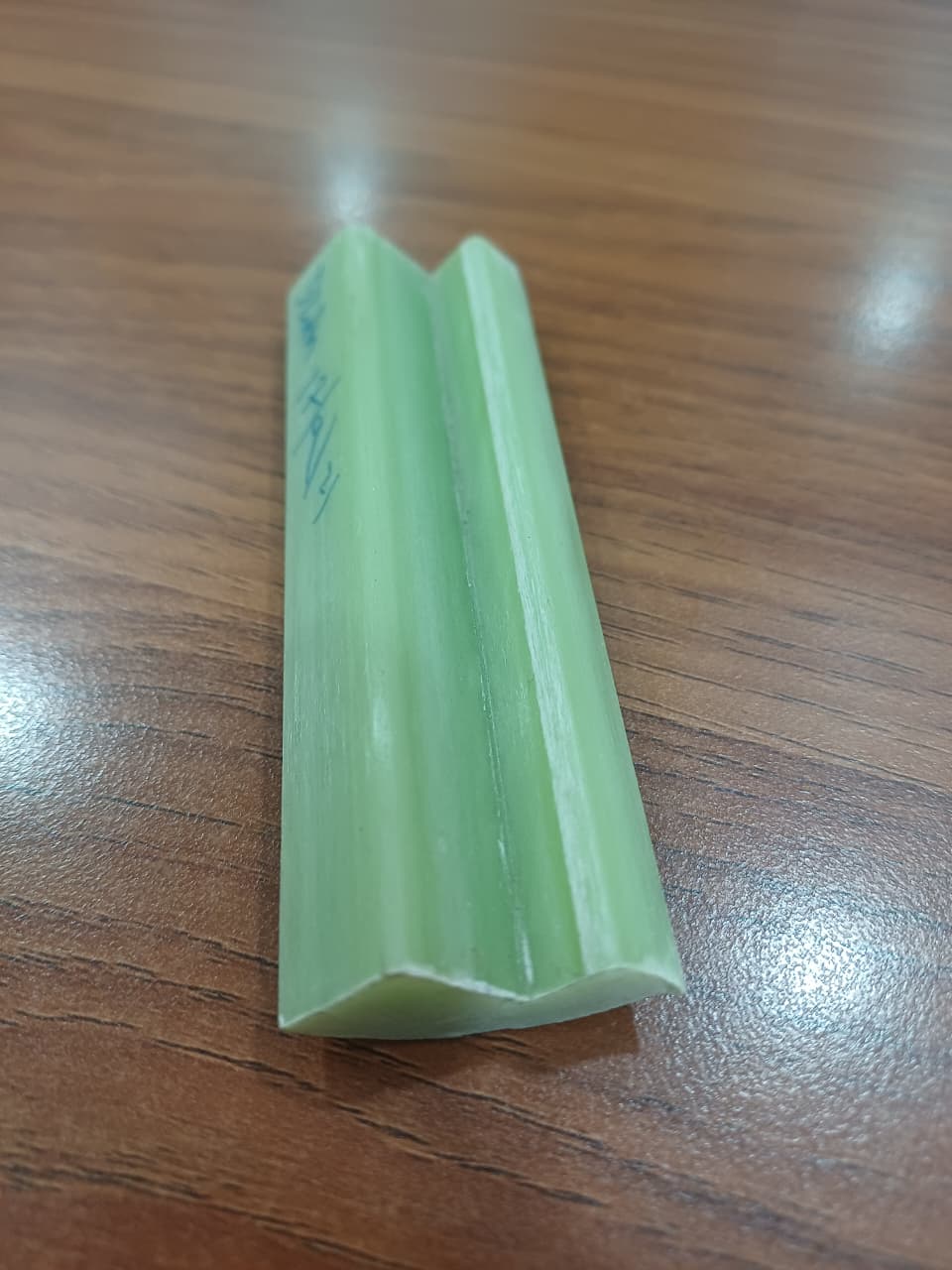
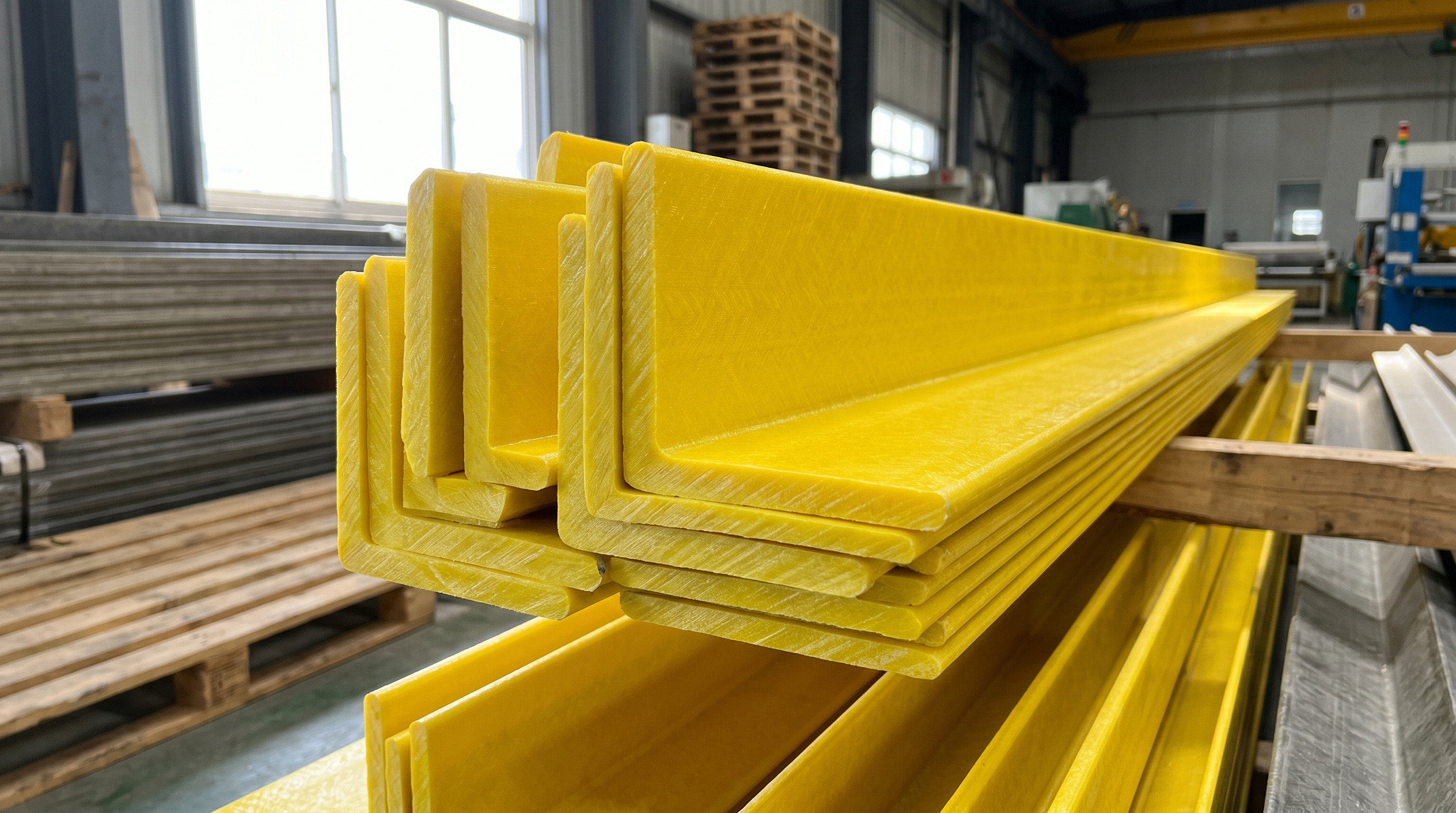
Corner Angle Sections — also called L-sections, angle irons, or structural angle brackets — deliver two-axis bending resistance in a compact, 90° L-shaped cross-section. Manufactured by ACC Insulations in equal and unequal leg configurations, these precision components serve as structural framing members, insulation angle brackets, cable tray corner joints, and busbar support structures across electrical, switchgear, transformer, and industrial fabrication applications.
Each section leaves our Maharashtra facility cut-to-length, drilled or punched per OEM drawings, and finished to specification — in GRP/FRP for electrically insulating structural duty or in mild steel and stainless steel for load-bearing structural framing.

Technical Specifications
| Corner Angle Section — Full Technical Data | |
|---|---|
| Product Name | Corner Angle Section — L-Shaped Structural Framing Component |
| Section Type | Equal Leg (L × L × t) | Unequal Leg (L1 × L2 × t) |
| Included Angle | 90° standard | Custom angles available on request |
| Equal Leg Sizes | 25×25 mm to 150×150 mm | Thickness: 3 mm to 12 mm |
| Unequal Leg Sizes | 40×25 mm to 150×75 mm | Thickness: 3 mm to 10 mm |
| Materials | GRP / FRP (glass reinforced polymer) | Mild Steel | SS304 | SS316 |
| Surface Finish | Natural GRP | Powder-coated | Hot-dip galvanised | Mill finish |
| Length | Standard 1 m / 2 m / 3 m | Cut-to-length per OEM drawing |
| Hole Patterns | Punched or drilled — custom diameter, pitch, and edge distance per specification |
| Dimensional Tolerance | Leg length: ±0.5 mm | Thickness: ±0.2 mm | Squareness: ±0.5° |
| Applications | Structural framing, insulation angle brackets, cable tray corners, busbar supports, switchgear enclosures, transformer sub-frames |
| Standards | IS 2062 (steel), IS 1239, customer-specific OEM acceptance criteria |
What Is a Corner Angle Section?
A Corner Angle Section — universally recognised as an L-section or angle iron — carries two flat legs meeting at a precise 90° included angle, forming an L-shaped cross-section along its full length. This geometry delivers simultaneous resistance to bending, torsion, and shear in two perpendicular planes from a single compact profile — making it one of the most structurally efficient cross-sections in fabrication and structural assembly engineering.
ACC Insulations manufactures Corner Angle Sections as precision-finished components ready for direct OEM assembly — cut-to-length, hole-punched or drilled, and finished per specification. Unlike commodity steel angle sourced from stockists, every ACC Corner Angle Section leaves production as a complete, assembly-ready component matched to exact dimensional and material requirements.
Equal Leg vs Unequal Leg — The Geometry Explained
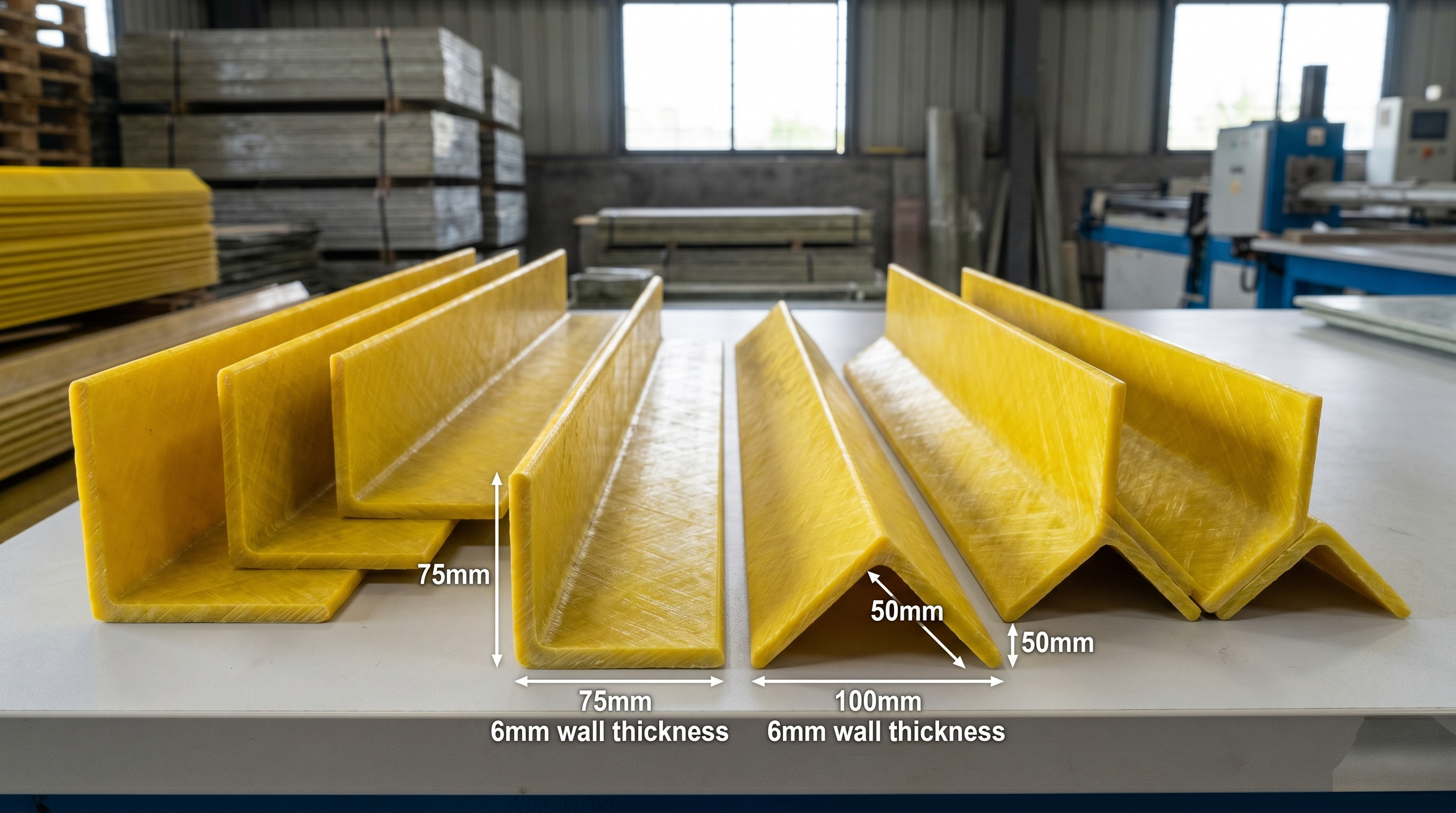
Both configurations share the same 90° corner geometry but serve distinct structural and spatial roles:
Corner Angle Section — Cross-Section Geometry
L = leg length · t = leg thickness · Included angle = 90° standard
Symmetrical L-Section
Identical leg lengths on both arms. Symmetrical bending resistance about both section axes. Simplifies design calculations, material procurement, and on-site fabrication — one section orientation serves all four corner positions. Standard choice for cable tray corner joints, switchgear panel frames, rack uprights, and enclosure corner reinforcement.
Asymmetrical L-Section
Longer and shorter legs allow different structural reach on each axis. Longer leg spans wider structural gaps or provides extended bolt fixing patterns; shorter leg maintains tight clearance to adjacent components. Preferred for busbar support brackets, insulation angle assemblies, and transformer sub-frame applications where spatial constraints prevent equal-leg use.
Available Materials
Material selection determines whether the Corner Angle Section serves a structural, insulating, or combined structural-insulating function. Four material families available:
GRP / FRP (Glass Reinforced Polymer)
High dielectric strength — no conductive path created at structural joints. Corrosion-proof without coating. Lightweight. Preferred material for busbar support brackets, insulation angle frames inside switchgear and transformers, and MV/HV enclosure structural framing where metallic sections create fault risk.
Mild Steel (MS) — IS 2062
High tensile and yield strength. Economical. Available with powder-coat or hot-dip galvanising for corrosion resistance. Standard choice for cable tray corner joints, panel enclosure outer frames, equipment support structures, and general fabrication applications without electrical insulation requirements.
Stainless Steel — SS304
Excellent corrosion resistance in humid, marine, and mild chemical environments. Maintains structural and surface properties without coating degradation. Used in outdoor switchgear enclosures, coastal installations, food and pharmaceutical plant electrical infrastructure, and water treatment facilities.
Stainless Steel — SS316
Superior resistance to chloride-induced pitting and crevice corrosion versus SS304. Specifiable for offshore, chemical process, desalination, and highly aggressive industrial environments where SS304 would suffer localised corrosion at fastener holes and joint faces.
How Corner Angle Sections Function in Structural Assemblies
Understanding the structural mechanics of an L-section explains why it dominates corner and framing applications across electrical OEM fabrication:
Two-Axis Bending Resistance from One Profile
Each leg of the Corner Angle Section acts as a flange resisting bending in its respective plane. Vertical loads applied to the horizontal leg create bending about the horizontal axis — resisted by the vertical leg acting as the web. Lateral loads act in reverse. A single L-section therefore replaces two separate flat bars at a corner, reducing part count and weld length simultaneously.
Corner Reinforcement Without Additional Gussets
At structural frame corners, L-sections provide inherent rigidity without needing additional gusset plates. Both legs bolt or weld directly to adjoining frame members — the corner geometry itself transfers load between connected members without introducing stress concentration at unwelded corners, significantly reducing fabrication time on enclosure and tray assemblies.
Busbar and Insulator Mounting Platform
In switchgear and transformer interiors, GRP Corner Angle Sections function as the primary structural mounting platform for busbar insulator clamps and spacer supports. The horizontal leg provides the insulator fixing surface while the vertical leg attaches to the enclosure frame — isolating the busbar completely from the conductive enclosure structure.
Cable Tray Corner Transition
At cable tray direction-change points, Corner Angle Sections bridge the joint between two tray runs meeting at 90°. Each leg overlaps with one tray side rail and bolts through pre-punched holes — maintaining continuous structural continuity and cable support across the corner without field cutting or bending tray sections on site.
Transformer Sub-Frame Assembly
Corner Angle Sections form the primary structural elements of transformer core clamping frames, conservator support brackets, radiator mounting frames, and LV terminal box sub-frames. Cut-to-length and pre-drilled sections arrive at the transformer OEM's assembly line ready to bolt directly into position — eliminating on-line cutting, drilling, and deburring operations.
Key Performance Properties
Applications of Corner Angle Sections
GRP Corner Angle Section vs Steel Angle Section
Material choice between GRP and steel angle fundamentally changes the role the section plays in an assembly. Here is a direct technical comparison to guide specification:
| Property | GRP / FRP Angle Section | Mild Steel Angle Section | Stainless Steel (SS316) |
|---|---|---|---|
| Dielectric strength | ✓ High — no conductive path | ✗ Conductive — fault risk | ✗ Conductive — fault risk |
| Corrosion resistance | ✓ Inherent — no coating needed | ✗ Requires galv. or paint | ✓ Excellent, no coating |
| Weight vs steel | ✓ ~25% weight of MS | Baseline weight | Slightly heavier than MS |
| Structural load capacity | Moderate — adequate for electrical hardware | ✓ High load rating | ✓ High load rating |
| Maintenance requirement | ✓ Zero — no recoating | Periodic recoating required | ✓ Minimal — periodic inspection |
| Machinability / drilling | ✓ Easy — standard HSS bits | Standard drilling / punching | Harder — requires carbide tooling |
| Best for | Busbar supports, HV insulation frames, switchgear interiors | Cable trays, panel enclosures, general structural framing | Offshore, chemical, coastal, food-grade environments |
Custom Manufacturing Capabilities
Every ACC Insulations Corner Angle Section can be configured precisely to the OEM's assembly drawing — eliminating all secondary operations from the assembly line:
- Cut-to-length precision: Sections supplied at exact finished length per drawing — ±0.5 mm tolerance. No on-site cutting, deburring, or end-finishing required.
- Custom hole patterns: Punched or drilled hole arrays per OEM specification — diameter, pitch, edge distance, and quantity manufactured to drawing. Pre-punching eliminates drilling on the assembly floor and removes swarf contamination risk inside sensitive switchgear enclosures.
- Non-standard leg ratios: Unequal leg sizes beyond standard ranges produced to OEM specification for application-specific clearance and load requirements.
- Custom included angles: L-sections with included angles other than 90° — 45°, 60°, 120°, and custom — manufactured for specialised cable tray transition, enclosure bevel, or structural geometry requirements.
- Surface finish options: GRP natural finish, GRP with UV-resistant topcoat, mild steel powder-coated to RAL colour, hot-dip galvanised to IS 2629, or bare mill-finish for customer-applied coating.
- Batch and kit supply: Multiple section sizes and lengths supplied as kitted component sets per transformer or switchgear model — one part number per assembly, reducing goods-in sorting and component tracking overhead at the OEM plant.
Quality Control & Testing
Every production batch undergoes a documented quality inspection sequence before despatch:
- Dimensional verification — leg lengths, thickness, squareness (90° ± 0.5°), and cut-length checked against drawing at sample frequency per batch
- Hole position audit — punched or drilled hole pitch, diameter, and edge distance verified against OEM drawing with go/no-go gauges
- Surface inspection — GRP sections checked for delamination, voids, and surface crazing; steel sections checked for coating adhesion, skip, and mill scale residue
- Dielectric test (GRP grade) — sample sections tested for surface and through-thickness insulation resistance to confirm no conductive contamination of the glass fibre matrix
- Mechanical squareness test — sections placed against precision square; leg parallelism and flange flatness verified to drawing tolerance
Standards compliance: IS 2062 (steel structural sections), IS 1239, customer-specific OEM acceptance criteria. Material test certificates and dimensional inspection reports provided on request.
Why Choose ACC Insulations for Corner Angle Sections?
Component Manufacturer — Not a Stockist
Every section manufactured, cut, drilled, and finished in our Maharashtra facility under direct quality control. No third-party processing — full dimensional and material traceability on every batch.
Assembly-Ready Supply
Cut-to-length, pre-drilled, deburred, and finished sections arrive OEM assembly-line-ready — zero secondary operations, zero swarf contamination, zero on-floor cutting waste.
GRP Insulating Grade Available
GRP Corner Angle Sections for switchgear, busbar, and transformer applications where metallic sections create unacceptable fault risk — high dielectric, corrosion-proof, lightweight.
Full Custom Capability
Non-standard leg ratios, custom included angles, special hole patterns, and bespoke finishes produced to OEM drawings — no minimum geometry restrictions.
Reliable Production Lead Times
Consistent production scheduling aligned to transformer and switchgear OEM build calendars — on-time delivery across Maharashtra and pan-India.
Technical Specification Support
Engineering team advises on material selection between GRP, MS, and SS grades; leg configuration; hole pattern optimisation; and surface finish for each specific application environment.
Engineering Tools Suite
Calculate structural clearances, load capacities, busbar insulation distances, and section selection parameters for switchgear and transformer assembly design using our interactive engineering tools.
Frequently Asked Questions
A Corner Angle Section — also called an L-section or angle iron — carries two flat legs set at 90° to each other, forming an L-shaped cross-section. Equal leg configurations carry the same leg length on both arms; unequal leg configurations carry two different leg lengths for asymmetric structural or clearance requirements. The geometry delivers high rigidity against bending and torsion in both planes from a compact, single-extrusion profile — the dominant structural framing form in electrical enclosures, cable trays, busbar systems, and switchgear frames.
ACC Insulations manufactures Corner Angle Sections in Glass Reinforced Polymer (GRP/FRP) for electrically insulating structural applications, mild steel IS 2062 for general load-bearing structural framing, stainless steel SS304 for corrosion-resistant environments, and SS316 for offshore, chemical, or chloride-heavy environments. Custom composite or alloy materials available on request.
Equal leg sections carry both legs at identical lengths — example 50×50×5 mm — providing symmetrical bending resistance and simplifying design and fabrication. Unequal leg sections carry two different leg lengths — example 75×50×6 mm — allowing one leg to span a wider structural distance or provide additional bolt fixing area while keeping the shorter leg within tight spatial constraints. Selection depends on load path geometry, available structural envelope, and fixing requirements at each leg face.
Yes. ACC Insulations supplies Corner Angle Sections with fully custom hole patterns — punched or drilled — per OEM technical drawings. Hole diameter, pitch, edge distance, and count manufactured to specification. Pre-drilled and pre-punched sections eliminate on-line drilling operations, remove swarf generation risk inside sensitive switchgear enclosures, and significantly reduce assembly cycle time at the OEM plant.
Glass Reinforced Polymer (GRP) Corner Angle Sections provide structural rigidity comparable to light-gauge steel while delivering high dielectric strength — making them the only suitable material for busbar support frames, insulation bracket assemblies, and switchgear internal structural elements where metallic sections would create conductive paths, ground faults, or phase-to-earth short-circuit risk. GRP sections also resist corrosion completely in humid enclosure environments without coating, maintenance, or recoating over their full service life.
Standard equal leg sizes range from 25×25 mm to 150×150 mm with thickness from 3 mm to 12 mm. Standard unequal leg sizes range from 40×25 mm to 150×75 mm with thickness 3 mm to 10 mm. Custom leg lengths, non-standard thickness, special included angles, and extended length sections manufactured on request to OEM specification with full dimensional documentation.
Corner Angle Sections serve as structural members in transformer core clamping frames, conservator support brackets, radiator mounting frames, LV terminal box sub-frames, cable tray corner joints, switchgear enclosure framing, busbar insulator mounting brackets, control panel rack uprights, and LV panel corner reinforcement structures. Pre-drilled and cut-to-length sections supplied as kitted component sets per transformer or switchgear model — arriving assembly-line-ready at the OEM plant.
Request a Quote
Get pricing & datasheet within 24 hours