
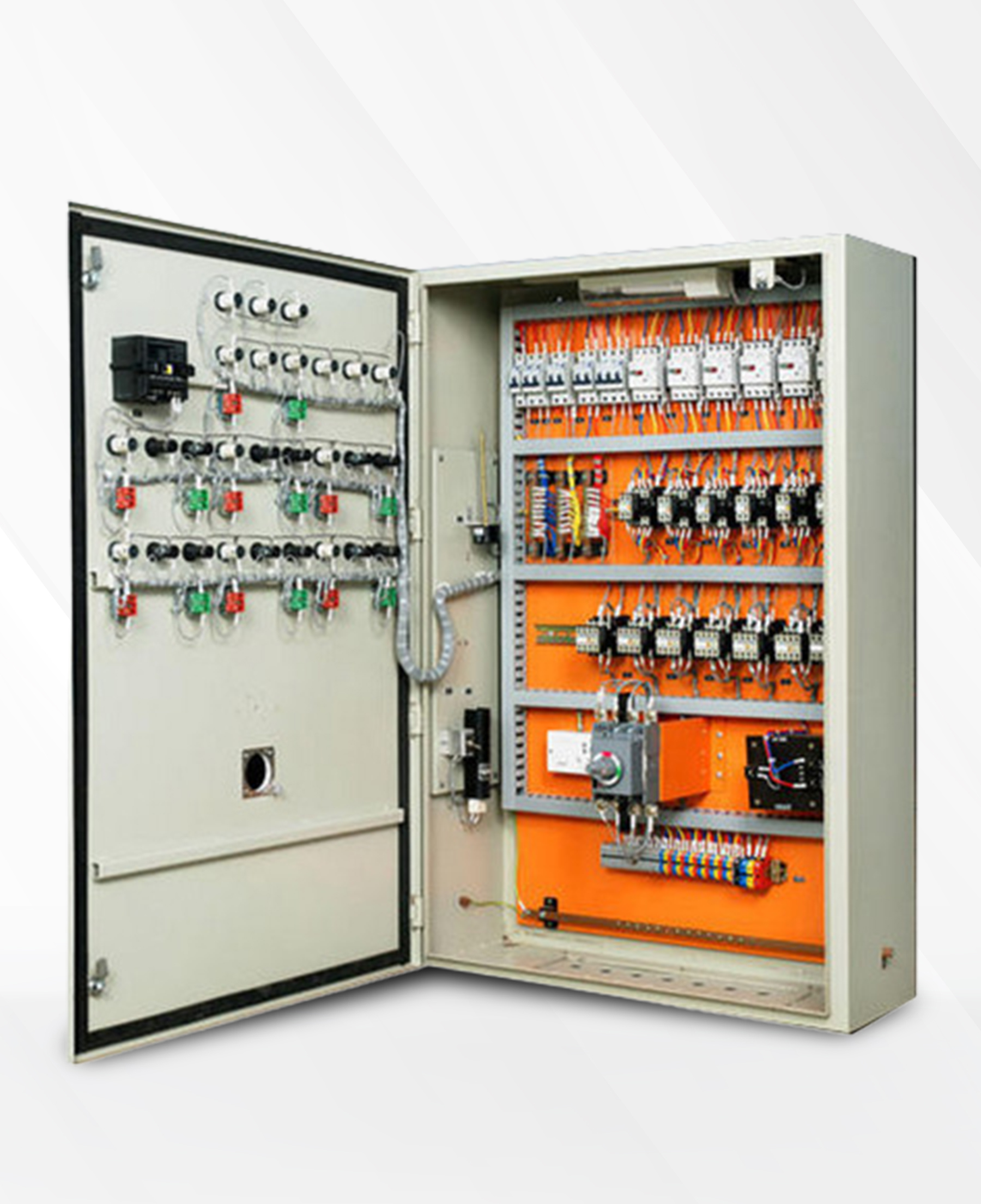
Switchgear Insulation — Why Material Grade Matters
Control panels and switchgear operate under continuous electrical, thermal, and mechanical stress. Wrong insulation grade causes dielectric breakdown, arc faults, and catastrophic downtime. Right material selection prevents all three.
ACC Insulations stocks FR4, G10, G11 fibre glass epoxy laminates, electrical-grade pressboards, FRP sheets, and industrial composite insulators — each matched to specific voltage classes, thermal ratings, and environmental demands of LV, MV, and HV switchgear.
Clients across power generation, oil & gas, railways, cement, and manufacturing source from our Maharashtra warehouse. Same-week dispatch on standard grades. Custom cutting available on order.
| Quick Material Specifications | |
|---|---|
| Thickness Range | 0.5 mm — 100 mm |
| Dielectric Strength | 18 — 25 kV/mm (grade-dependent) |
| Thermal Class | Class B (130°C) to Class H (180°C) |
| Tensile Strength | ≥ 80 MPa |
| Water Absorption | ≤ 0.5% over 24 hr |
| Flame Rating | UL 94 V-0 |
| Standards | IEC 60893 | IS 2036 | NEMA |

Why High-Grade Insulation Prevents Switchgear Failure
Substandard insulation degrades under thermal cycling. Surface tracking leads to partial discharge, then full arc flash. Each failure mode below directly corresponds to a material property — select against the failure, not against price.
- Arc Flash & Flashover: High dielectric strength (≥18 kV/mm) interrupts arc propagation between live conductors.
- Phase-to-Phase Short Circuits: Phase barriers in FR4 or G11 maintain creepage and clearance distances per IEC 60664.
- Thermal Degradation: Thermal Class F (155°C) and Class H (180°C) laminates maintain mechanical integrity under continuous load.
- Surface Tracking: High CTI (Comparative Tracking Index ≥ 400 V) resists carbon tracking on insulator surfaces in humid environments.
- Mechanical Failure: Tensile strength ≥ 80 MPa supports heavy copper busbar weight without creep or cracking.
- Operator Injury: Flame-retardant UL 94 V-0 rated material self-extinguishes, reducing injury risk during fault conditions.
Insulation Materials Supplied — Grades & Applications
FR4 Fibre Glass Epoxy Laminate
Dominant switchgear insulation grade. Excellent dielectric strength, low moisture absorption, flame-retardant (UL 94 V-0). Machinable into phase barriers, arc chutes, and mounting plates.
Dielectric: 18–22 kV/mm | Temp: up to 130°CG10 Epoxy Glass Laminate
High mechanical strength in wet conditions. Preferred for coastal installations and humid environments. Maintains CTI > 400 V even after moisture exposure.
Dielectric: 18–20 kV/mm | Temp: up to 130°CG11 High-Temp Epoxy Laminate
Thermal Class H (180°C). Chosen for MV/HV switchgear, motor control centres, and transformer-fed panels running under sustained high thermal load. Retains full mechanical properties at elevated temperatures.
Dielectric: 20–25 kV/mm | Temp: up to 180°CElectrical Grade Pressboard & Kraft Paper
Standard for compact LV panel dielectric spacers and conductor wrapping. Precise dimensional tolerances ensure consistent creepage gaps. Grades: 3.0 mm pressboard for busbar slots; kraft paper for conductor insulation wrapping.
Dielectric: 10–14 kV/mm | Temp: up to 105°CFRP Sheets — Fibre Reinforced Plastic
Superior moisture, chemical, and UV resistance. CTI > 600 V. Internal panel partitions, cable gland plates, external enclosure lining. Zero galvanic corrosion with metal bus structures.
Dielectric: 14–18 kV/mm | Temp: up to 130°CIndustrial Composite Insulators
Engineered for simultaneous mechanical and electrical stress. Bus support insulators, stand-off posts, and through-wall feed-through sleeves for switchgear compartments. Available in sheet, rod, and tube forms.
Dielectric: 15–22 kV/mm | Temp: up to 155°CMaterial Comparison — Switchgear Selection Guide
| Grade | Dielectric kV/mm | Max Temp °C | Moisture Resist. | Flame Rating | Best For |
|---|---|---|---|---|---|
| FR4 | 18 – 22 | 130 | High | UL 94 V-0 | LV/MV panels, phase barriers |
| G10 | 18 – 20 | 130 | Very High | UL 94 V-0 | Humid/coastal environments |
| G11 | 20 – 25 | 180 | High | UL 94 V-0 | MV/HV switchgear, MCC panels |
| FRP | 14 – 18 | 130 | Excellent | V-0 / V-1 | Enclosures, partitions, cable trays |
| Pressboard | 10 – 14 | 105 | Moderate | — | LV spacers, conductor wrapping |
Switchgear & Control Panel Applications
Every application below demands specific material properties. Wrong grade selection causes premature failure at each point.
- LV/MV Control Panels: FR4 phase barriers, pressboard spacers between busbars, FRP back panels for cable management.
- HV Switchgear Compartments: G11 barriers, composite stand-off insulators, arc-resistant enclosure lining.
- Busbar Trunking & Phase Barriers: FR4 strips machined to busbar cross-section prevent inter-phase flashover.
- Motor Control Centres (MCC): G10/G11 draw-out unit compartment walls, isolating incoming and outgoing compartments.
- Power Distribution Boards (PDB): Pressboard conductor wrapping, FRP base plates for switchfuse assemblies.
- Railway Traction Panels: G11 laminates handle vibration plus thermal cycling — critical for traction applications.
- Oil & Gas Control Stations: FRP sheets resist H₂S, salt spray, and chemical vapors common in process plants.
Compliance Standards & Certifications
All materials meet applicable international and Indian standards. Request test reports and mill certificates on any order.
Applicable Standards
IEC 60893 — Industrial Laminates IS 2036 — Epoxy Laminate India UL 94 V-0 — Flame Retardancy IEC 60664 — Insulation Coordination IEC 60439 — LV Switchgear Assemblies NEMA LI-1 — Laminated Products ASTM D709 — FRP Sheet Standard IEC 60371 — Mica-Based InsulationWhy Source From ACC Insulations
Switchgear builders across Maharashtra, Gujarat, and Karnataka trust ACC Insulations for consistent grade quality, fast availability, and technical accuracy on material selection. No guesswork — correct grade, first time.
- Ready stock of FR4, G10, G11, FRP, and pressboard — no lead-time delays on standard grades.
- Custom sheet cutting service — exact dimensions supplied, reducing fabrication waste.
- Mill test certificates and IEC/IS compliance documentation available on request.
- Technical guidance on material-to-application matching — free pre-order consultation.
- Bulk pricing for OEMs, panel builders, and switchgear fabricators.
- PAN India dispatch from Maharashtra warehouse — fast delivery to all major industrial clusters.
Engineering Tools Suite
Calculate exact dielectric requirements, creepage distance, and insulation margins for switchgear and control panels using interactive tools.
FAQs — Switchgear Insulation Material
FR4 (EPGC 202) handles standard LV and MV panels. G10 suits humid or coastal environments. G11 withstands continuous temperatures above 155°C — preferred for MV/HV switchgear and MCC panels. Pressboards handle compact LV compartments needing precise dielectric spacing.
LV panels require ≥ 15 kV/mm dielectric strength. MV switchgear demands ≥ 20 kV/mm. FR4 and G11 laminates deliver 18–25 kV/mm, meeting IEC 60893 requirements across voltage classes.
IEC 60893 governs industrial laminated sheets for electrical purposes. IS 2036 applies within India. FR4 corresponds to IEC type EPGC 202; G10 maps to EPGC 201; G11 to EPGC 203. All carry UL 94 V-0 flame-retardant ratings.
FRP sheets resist moisture, chemical corrosion, and electrical tracking. Tracking Index (CTI) exceeds 600 V on quality FRP — far above phenolic alternatives. Internal panel partitions, gland plates, and sub-frame linings benefit most from FRP's combined corrosion and dielectric resistance.
Phase barriers use FR4 or G11 laminate strips machined to exact busbar profiles. Pressboard wrapping seals conductors at entry points. Slot liners from Nomex or fish paper provide additional layer insulation at conductor entry into motor starter units.
Switchgear insulation prevents arc flash and flashover between live conductors, isolates phase-to-phase and phase-to-earth faults, supports mechanical loads of copper busbars and conductors, and maintains operational continuity under continuous thermal cycling.
Stock includes FR4, G10, G11 fibre glass epoxy laminates; electrical grade pressboards and kraft papers; industrial composite insulators; corrosion-resistant FRP sheets; and Nomex-based thermal insulation strips — all compliant with IEC 60893 and IS 2036.