Transformer & Industrial Sealing — Maharashtra, India
Rubberized Cork Sheet
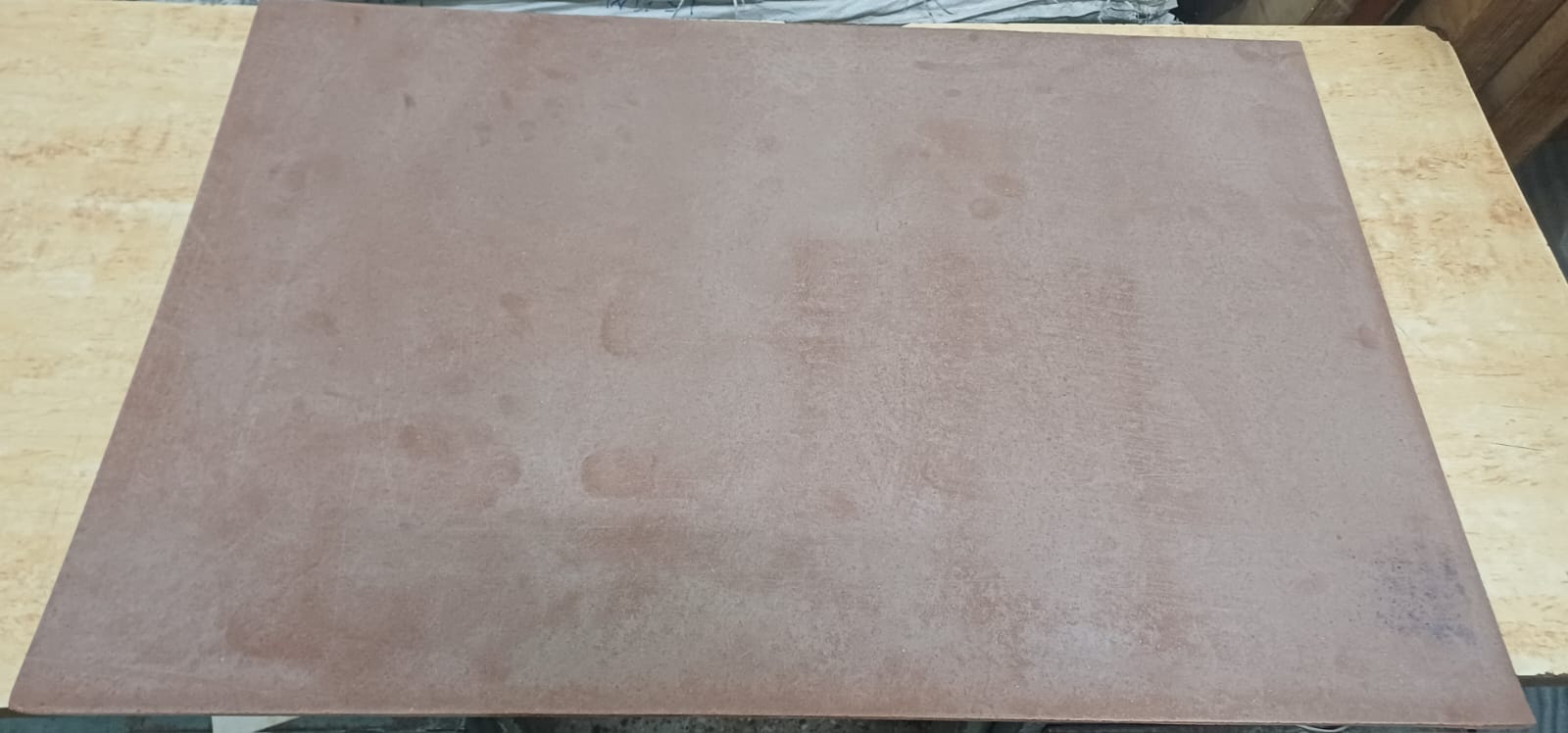
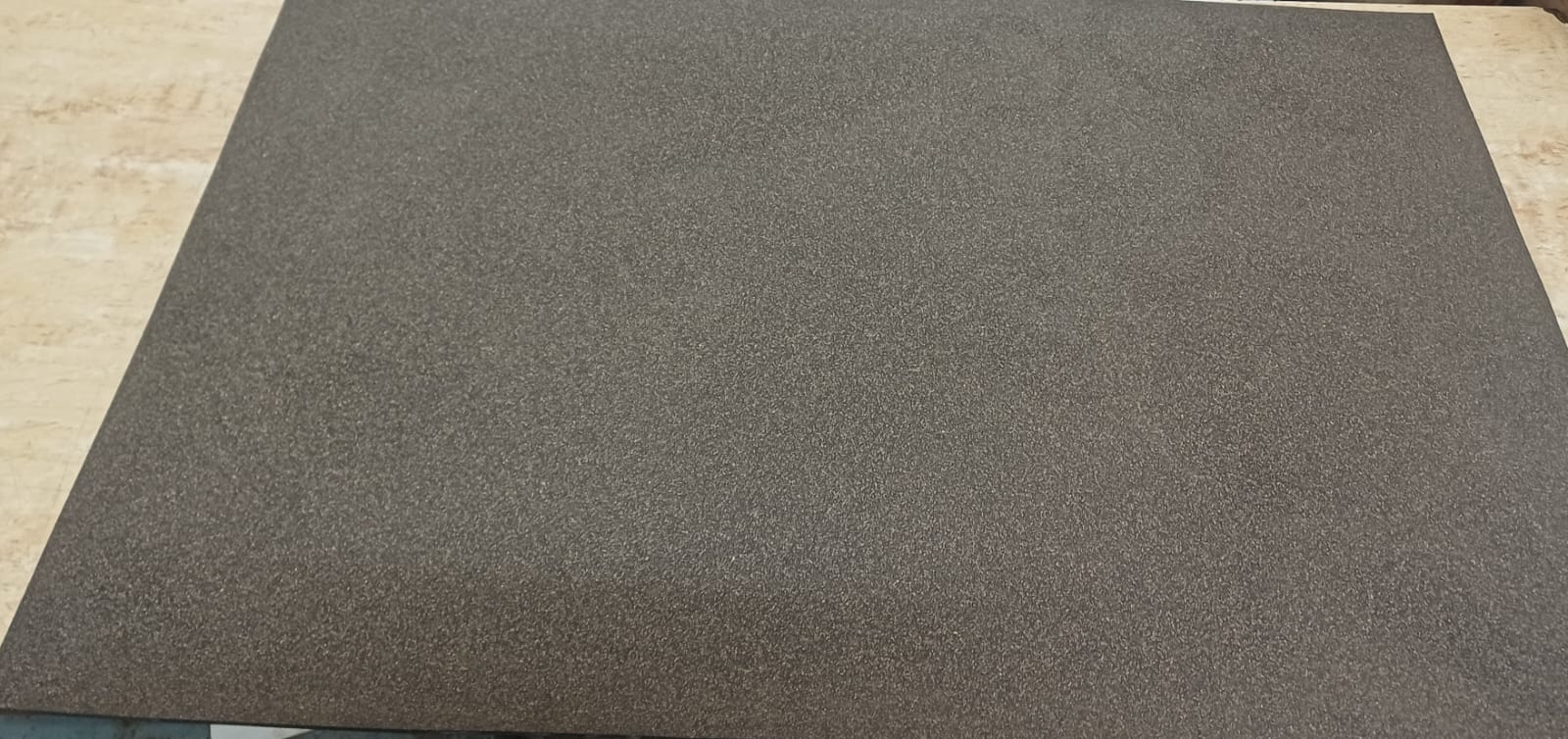
Rubberized cork sheet — also supplied as rubber bonded cork sheet, cork rubber gasket sheet, or nitrile cork sheet — is a composite sealing and insulation material produced by bonding natural cork granules with synthetic rubber compounds. It combines cork's unique compressibility without lateral spread with rubber's flexibility, oil resistance, and chemical durability.
ACC Insulations is an authorised supplier and distributor of rubberized cork sheet in Maharashtra, India. We supply nitrile (NBR), neoprene (CR), and SBR grades in thicknesses from 3 mm to 25 mm, in standard 610 mm × 915 mm sheets as well as custom cut sizes to your exact dimensions. Used widely for transformer oil gaskets, flanged joint seals, vibration damping pads, and general industrial sealing across the power, automotive, and engineering sectors.

Technical Specifications
| Rubberized Cork Sheet — Full Technical Data | |
|---|---|
| Product Name | Rubberized Cork Sheet (Rubber Bonded Cork / Cork Rubber Gasket Sheet) |
| Base Material | Natural cork granules (approx. 70–80% by volume) bonded with synthetic rubber |
| Rubber Binder Grades | Nitrile (NBR) · Neoprene (CR) · Styrene-Butadiene Rubber (SBR) |
| Thickness Range | 3 mm · 5 mm · 10 mm · 12 mm · 15 mm · 20 mm · 25 mm (custom available) |
| Standard Sheet Size | 610 mm × 915 mm — custom cut sizes available on request |
| Shore A Hardness | 50 Shore A · 70 Shore A · 80 Shore A (±5) depending on grade |
| Tensile Strength | 6 MPa (50 Shore A) · 12 MPa (70 Shore A) · 19 MPa (80 Shore A) |
| Compressibility (at 28 kg/cm²) | 45–60% (50 Shore A) · 35–50% (70 Shore A) · 15–25% (80 Shore A) |
| Recovery | Minimum 80% recovery after compression |
| Temperature Range | −30°C to +110°C continuous service |
| Dimensional Change | Less than 0.1% deformity at operating temperature |
| Dimensional Change (%) | Max. 1.5% under operating conditions |
| Oil Immersion (ASTM No.3 Oil, 70 hr, 100°C) | Volume change: 40% (50 Shore A) · 25% (70 Shore A) · 15% (80 Shore A) |
| Compression Set (at 70°C) | 80% (50 Shore A) · 85% (70 Shore A) · 90% (80 Shore A) |
| Colour | Dark Brown / Black |
| Supply Form | Standard sheets, cut-to-size pieces, strips — as per customer requirement |
What Is Rubberized Cork Sheet?
Rubberized cork sheet — also called rubber bonded cork sheet, cork rubber gasket material, or nitrile cork sheet — is a composite material produced by blending finely graded natural cork granules with a synthetic rubber compound, then compressing and vulcanising the mixture under heat and pressure into uniform sheets.
The final sheet consists of approximately 70–80% natural cork granules by volume, with the rubber acting as a binding matrix that holds the granules together and adds chemical resistance, flexibility, and weather durability. This ratio gives rubberized cork its defining characteristic: cork is the only natural material that compresses without lateral spread. Under bolt load at a flanged joint, solid rubber sheet extrudes sideways and can blow out. Cork compresses only in the direction of applied load — making it the correct gasket material for rough or slightly uneven cast flange surfaces where high bolt loads are not achievable.
What Makes Rubberized Cork Work — The Composite Structure
The properties of rubberized cork sheet arise directly from the complementary contributions of its two components:
Cross-Section — Cork Granule + Rubber Matrix
Rubber skins on outer faces · Natural cork granule core · Vulcanised composite structure
| Material Component | What It Contributes | Why It Matters |
|---|---|---|
| Natural cork granules (70–80% by vol.) | Compressibility, recovery, thermal insulation, vibration damping, low density | Seals uneven flange surfaces without high bolt loads; recovers shape on release |
| Synthetic rubber binder (NBR / CR / SBR) | Chemical resistance, flexibility, oil resistance, weather and ozone resistance | Prevents degradation in oil, fuel, water, or outdoor environments; adds tensile strength |
| Vulcanisation (heat + pressure cure) | Bonds cork and rubber into a dimensionally stable, homogeneous composite | Prevents granule separation under service conditions; ensures consistent thickness |
Rubber Grade Selection — NBR vs Neoprene vs SBR
The correct rubber binder grade determines the sheet's chemical compatibility with the sealing environment. Specifying the wrong grade leads to premature swelling, hardening, or complete gasket failure. Here is a direct guide:
Nitrile Cork Sheet
Best grade for transformer mineral oil, petroleum oils, fuels, and hydraulic fluids. Recommended for all oil-filled transformer gasket applications up to 110°C. Standard grade for most industrial oil-sealing uses.
Neoprene Cork Sheet
Excellent outdoor, weather, ozone, and UV resistance. Suitable for water, mild acids, refrigerants, and many chemicals. Preferred for outdoor switchgear, weather-facing flanges, and refrigeration equipment.
SBR Cork Sheet
General-purpose grade for water, steam, and non-oil industrial sealing. Good abrasion resistance and low-cost option for non-aggressive environments. Not suitable for petroleum oil or transformer oil contact.
Available Thicknesses
We stock rubberized cork sheet in the following standard thickness grades. Custom thicknesses are available on request for specific gasket or insulation applications:
Standard sheet dimensions: 610 mm × 915 mm. Custom cut sheets available — specify thickness, plan dimensions, and quantity required.
Custom Cut Sizes — Supplied to Your Dimensions
We supply rubberized cork sheet cut to your exact specifications — custom length × width × thickness combinations for gasket blanks, insulation pads, vibration damping strips, or any other industrial application. Share your dimensions and required quantity with our sales team for pricing and lead time.
Key Performance Properties
Applications of Rubberized Cork Sheet
Why Rubberized Cork Is the Standard Transformer Gasket Material
In oil-filled power and distribution transformers, maintaining an oil-tight seal at every flanged joint, cover plate, bushing, and radiator connection is a fundamental reliability requirement. A single gasket failure allows transformer oil to leak — causing fire risk, environmental contamination, and requiring an unplanned outage for repair. Cork's unique mechanical behaviour makes it the preferred gasket material for cast transformer flanges for three reasons:
- Conforms to rough flange surfaces without high bolt loads: Cast iron and mild steel transformer flanges are rarely perfectly flat. Minor casting irregularities, machining marks, and surface rust create surface variations of 0.1–0.5 mm. Cork's high compressibility (15–60% depending on grade) allows the gasket to conform to these variations under moderate bolt loads, creating an oil-tight seal across the full contact area. Rubber-only gaskets require higher bolt loads and perfectly smooth flanges to achieve equivalent sealing.
- Compresses vertically — does not extrude: Under bolt load, solid rubber extrudes laterally and can be squeezed out from between flanges if the bolt load is excessive or unevenly applied. Cork compresses in the vertical direction without spreading — so the gasket stays fully between the flanges regardless of bolt load variation. This is critical on transformer radiator flanges where bolt spacing is wide and uniform clamping pressure is difficult to achieve.
- Long-term oil resistance (NBR grade): Nitrile (NBR) rubber bonded cork has excellent resistance to mineral transformer oil (ASTM D3487) and ester-based dielectric fluids across the full service temperature range up to 110°C. The volume change in ASTM No.3 oil after 70 hours at 100°C is 15–40% depending on grade — the 80 Shore A (harder, denser) grade showing the lowest volume change and therefore the best long-term dimensional stability in continuously oil-immersed service.
- Dimensional change below 0.1%: Even at 110°C continuous service, rubberized cork sheet shows less than 0.1% dimensional deformity. This outstanding physical stability ensures the gasket maintains constant sealing pressure across the transformer's 25–40 year service life without requiring periodic re-torquing of flange bolts.
Rubberized Cork vs Other Gasket Materials
| Property | Rubberized Cork | Solid Rubber Sheet | Compressed Fibre (CAF) |
|---|---|---|---|
| Seals rough / uneven flanges | ✓ Excellent — conforms to surface | Moderate — needs smooth face | Moderate |
| Compressibility without lateral extrusion | ✓ Unique cork property | ✗ Extrudes laterally under load | Limited |
| Recovery after compression | ✓ Minimum 80% | ✓ High | Low — permanent set |
| Transformer mineral oil resistance (NBR) | ✓ Excellent | ✓ Grade-dependent | Moderate |
| Vibration damping | ✓ Good — cork absorbs vibration | Moderate | ✗ Poor |
| Ease of fabrication (knife / die cut) | ✓ Easy | ✓ Easy | Moderate |
| Best use case | Cast flanges, transformer gaskets, vibration pads | Smooth machined flanges, high-pressure seals | High-temperature, high-pressure industrial |
Why Source Rubberized Cork Sheet from ACC Insulations?
Established Distributor in Maharashtra
ACC Insulations is an established supplier and distributor of rubberized cork sheet to transformer OEMs, switchgear manufacturers, and industrial users across Maharashtra and India.
Custom Cut Sizes Available
We supply standard 610 mm × 915 mm sheets or custom cut pieces to your exact dimensions. Gasket blanks, strips, pads — specify your dimensions and quantity.
Multiple Grades In Stock
Nitrile (NBR), Neoprene (CR), and SBR grades stocked across 3–25 mm thickness range. Grade selection advice available — tell us your application and operating fluid.
OEM & Batch Supply
Reliable supply for transformer manufacturer production schedules and industrial maintenance requirements. Consistent material quality across repeat orders.
Technical Grade Selection Support
Not sure whether you need NBR, neoprene, or SBR grade? Our team advises on rubber grade, hardness, and thickness selection for your specific sealing environment and operating conditions.
Fast Response & Delivery
Nashik-based stocking distributor. Standard sizes available for immediate dispatch. Custom cut orders fulfilled on short lead times. WhatsApp enquiries welcome.
Looking for Other Transformer Sealing & Insulation Materials?
ACC Insulations supplies a complete range of transformer sealing and insulation materials — from rubberized cork sheet and high-voltage Rubberized Cork Sheet to pre-compressed pressboard, diamond dotted paper, and electrical grade kraft paper. Use our insulation finder to match the right material to your application.
Frequently Asked Questions
Rubberized cork sheet — also called rubber bonded cork sheet or cork rubber gasket sheet — is a composite material produced by blending natural cork granules (approximately 70–80% by volume) with a synthetic rubber binder such as nitrile (NBR), neoprene (CR), or styrene-butadiene rubber (SBR). The mixture is compressed and vulcanised under heat and pressure to form a dense, flexible sheet. The result combines cork's natural compressibility and recovery with rubber's resistance to oils, fuels, and chemicals — creating a material uniquely suited to sealing uneven flange surfaces in transformers, industrial machinery, and automotive applications.
In power and distribution transformers, rubberized cork sheet is used as oil-tight gasket material for flanged joints, cover plates, bushing flanges, tap changer compartment seals, and radiator inlet/outlet connections. Nitrile (NBR) rubber bonded cork is the preferred grade because NBR has excellent resistance to mineral transformer oil across the full service temperature range up to 110°C. Cork's compressibility allows the gasket to conform to minor surface irregularities on cast iron flange faces without requiring high or perfectly uniform bolt loads — making it the standard sealing material at transformer flange joints throughout the industry.
Nitrile (NBR) grade is the correct choice for all transformer mineral oil sealing applications. NBR has excellent compatibility with petroleum-based mineral transformer oils and ester dielectric fluids at temperatures up to 110°C. Neoprene (CR) bonded cork is suitable for outdoor, weather-exposed, or refrigerant applications. SBR cork is a general-purpose grade for water, steam, and non-oil environments — SBR must not be used in contact with transformer oil as it swells aggressively in petroleum oils and will fail. When in doubt, specify NBR grade for any oil or fuel sealing application.
ACC Insulations supplies rubberized cork sheet in standard thickness grades of 3 mm, 5 mm, 10 mm, 12 mm, 15 mm, 20 mm, and 25 mm. Standard sheet dimensions are 610 mm × 915 mm. We also supply custom cut sizes — sheets or individual pieces cut to your specified length, width, and thickness for transformer gasket manufacture, vibration damping pads, or industrial sealing applications. Share your dimensions and quantity with our sales team for a quote.
Rubberized cork sheet has a continuous service temperature range of −30°C to +110°C for standard nitrile and neoprene bonded grades. At temperatures up to 110°C, the dimensional change is less than 0.1% — the physical stability is excellent. In transformer oil service, this covers the full range of operating and emergency overload temperatures. For applications requiring service above 110°C, please contact our team with your specific operating conditions for grade selection guidance.
Yes. Rubberized cork sheet is easily fabricated using heavy-duty scissors, sharp utility knives, or die-cutting equipment. Clean cuts are achievable without specialist tooling for most thicknesses up to 10 mm. For thicker sheets (15–25 mm), a band saw or heavy die delivers cleaner results. ACC Insulations can supply standard sheets for your in-house gasket cutting, or we can supply pieces pre-cut to your specified plan dimensions. Contact us with your required thickness, dimensions, and quantity.
The key advantage of rubberized cork over solid rubber at transformer flanged joints is compression without lateral extrusion. Under bolt clamping load, solid rubber sheet spreads sideways and can be squeezed out from between flanges — particularly problematic on cast flanges where bolt spacing is wide or surface finish is rough. Cork compresses only in the direction of applied load and conforms to surface irregularities without spreading, maintaining full contact across the flange face. This makes rubberized cork the correct material for cast iron transformer flanges where perfectly smooth, closely-bolted mating surfaces are not achievable. Solid rubber is preferred for smooth machined flanges at higher fluid pressures where extrusion risk is managed by precise bolt loads.
Request a Quote
Get pricing & availability within 24 hours