
Phenolic Paper Laminate — Fabricator & Distributor, Maharashtra, India
Bakelite Sheet
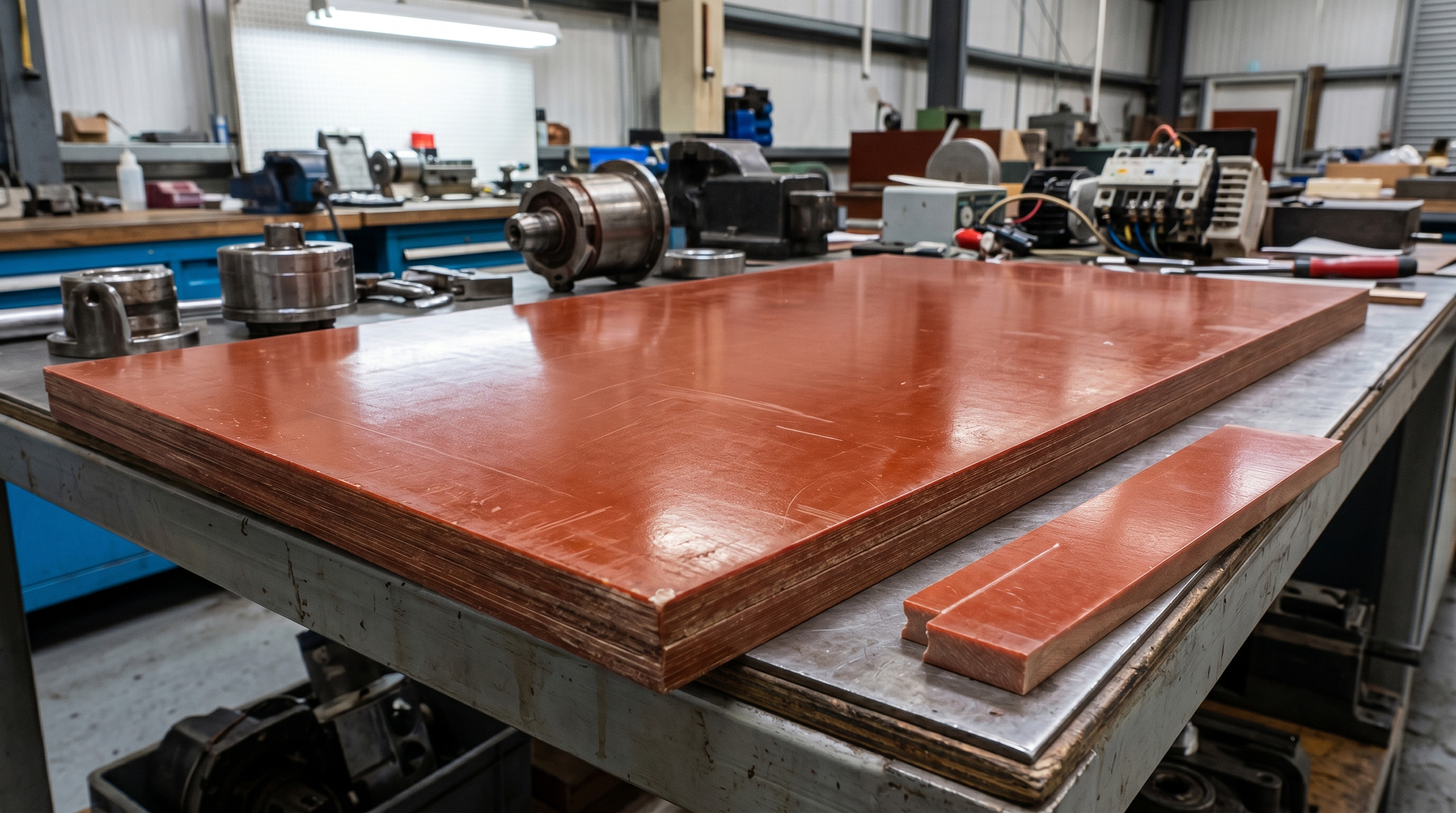
Bakelite sheet — widely recognised as phenolic paper laminate, phenolic laminate board, or paper phenolic sheet — fabricates from multiple layers of Kraft paper impregnated with phenol-formaldehyde (phenolic) resin, cured under heat and pressure into a rigid, dense insulation board. Named after Leo Baekeland's original synthetic phenolic resin, 'Bakelite' endures in India as the standard trade name for this class of electrical insulation laminate.
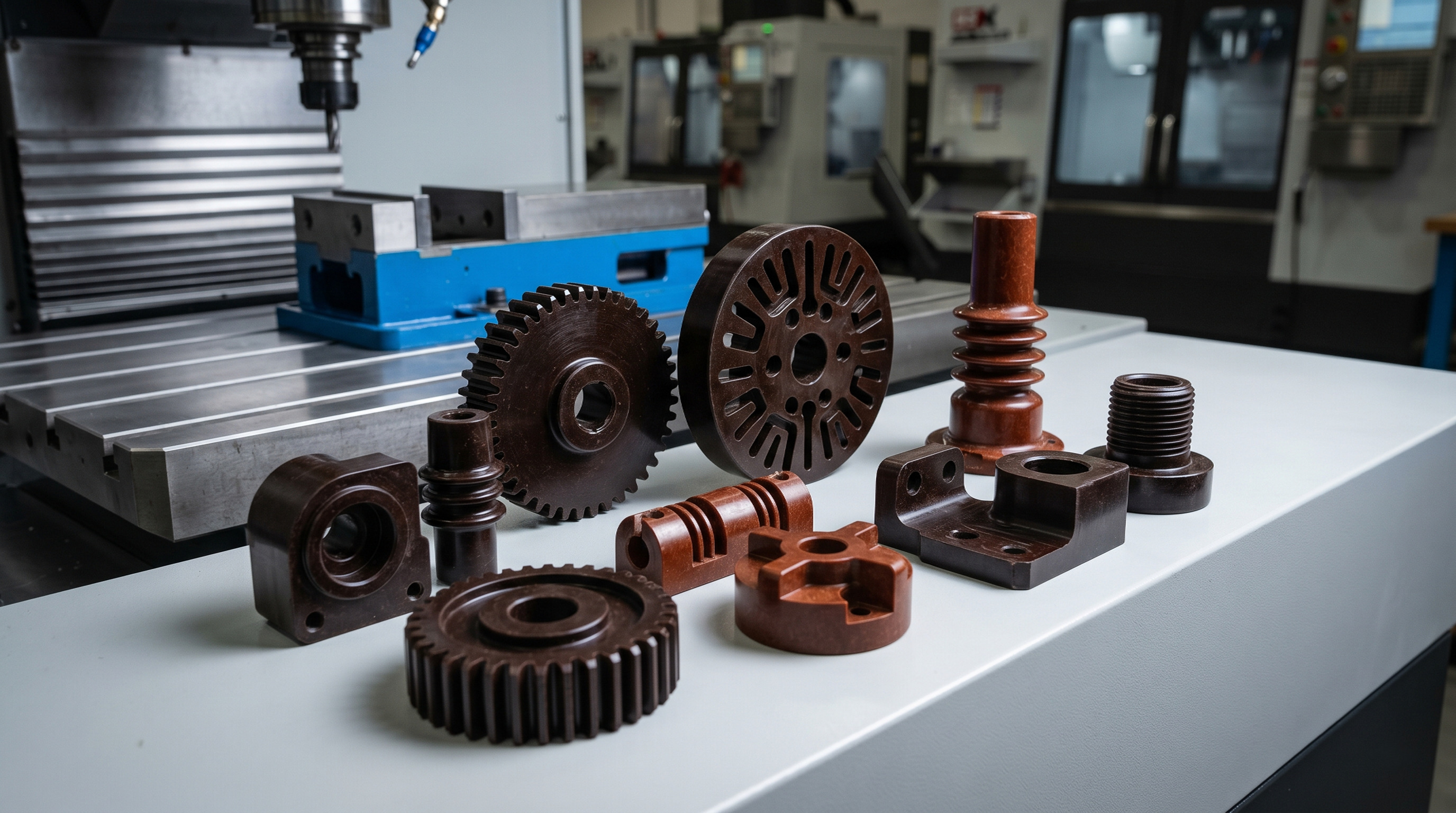
ACC Insulations fabricates and distributes electrical-grade Bakelite sheets in NEMA XX, NEMA XP, and FR-2 grades — covering standard electrical insulation, precision punching applications, and flame-retardant requirements — across 1 mm to 100 mm thickness with custom CNC-machined components available to OEM drawings.

Technical Specifications
| Bakelite Sheet (Phenolic Paper Laminate) — Complete Technical Data | |
|---|---|
| Grades Available | NEMA XX, NEMA XP (punching grade), FR-2, IS 2036 Grade P |
| Reinforcement | Kraft Paper (cellulose paper, multiple plies) |
| Resin System | Phenol-Formaldehyde (Phenolic) Resin — thermosetting |
| Thickness Range | 1 mm to 100 mm |
| Standard Sheet Size | 1020 × 1220 mm; custom sizes available |
| Colours Available | Brown (standard), Black |
| Density | 1.3–1.4 g/cm³ |
| Dielectric Strength | High — meets IEC 60893 / NEMA LI-1 requirements |
| Arc Resistance | Good — suitable for switchgear and panel insulation |
| Flame Retardancy | FR-2 grade — UL 94 V-1 compliant |
| Thermal Class | Class B — 130°C continuous service |
| Water Absorption | Moderate — higher than fibre glass laminates; avoid sustained water immersion |
| Machinability | Excellent — CNC routing, milling, drilling, sawing, punching (XP grade) |
| Standards | IEC 60893, NEMA LI-1, IS 2036, UL 94 |
What Bakelite Sheet Is
Bakelite sheet — formally a phenolic paper laminate — compresses multiple layers of Kraft paper, each thoroughly impregnated with liquid phenolic resin, in a hydraulic hot press. Heat above 150°C triggers the phenol-formaldehyde resin to complete its cross-linking reaction, permanently bonding the paper plies into a single homogeneous insulation board. No reversible softening occurs after curing — this thermoset chemistry delivers the dimensional stability and electrical insulation properties that make Bakelite sheets a staple of electrical fabrication across India.
The material predates all synthetic polymer composites — phenolic resin was patented in 1907. Decades of real-world service across electrical switchgear, industrial panels, and machinery insulation have validated its performance envelope completely. For general-purpose electrical insulation at Class B temperatures, Bakelite sheets remain one of the most cost-effective and reliable materials available.
Available Grades
Three principal Bakelite sheet grades cover the full range of electrical insulation, punching, and flame-retardant requirements:
NEMA XX — Standard Electrical Grade
Primary electrical-grade phenolic paper laminate. Optimised for high dielectric strength, arc resistance, and dimensional stability. Machines cleanly via CNC routing, drilling, and milling. Default specification for terminal boards, switchgear barrier panels, contactor bases, motor terminal plates, and general electrical insulation components across the 1–100 mm thickness range.
NEMA XP — Precision Punching Grade
Formulated with a softer, more pliable phenolic resin that allows clean die-punching and blanking at room temperature — without cracking, delamination, or feathered edges. Specified for high-volume stamped insulation components: insulating washers, terminal strip spacers, barrier plates, and small-format switchgear parts produced on progressive dies. Not suitable for high-temperature or high-humidity applications.
FR-2 — Flame-Retardant Grade
Phenolic paper laminate with brominated flame-retardant chemistry achieving UL 94 V-1 classification. Retains full mechanical and dielectric properties of NEMA XX while meeting fire safety compliance requirements for indoor switchgear panels, control cabinets, and electrical enclosures where V-1 certification applies. PCB substrate alternative to FR-4 for lower-frequency and cost-sensitive applications.
Available Colours
Bakelite sheets carry resin-derived colouration — brown from the natural phenol-formaldehyde cured resin, black from carbon-pigmented resin formulations. Colour carries no bearing on electrical or mechanical performance.
Thickness Range: 1 mm to 100 mm
Full thickness range covers every Bakelite sheet application from thin panel liners to heavy-section machined components:
Thin Sheets
Panel liners, terminal board substrates, inter-phase barriers in LV switchgear
Standard Sheets
Switchgear base plates, control panel insulation boards, contactor mounting plates
Medium Sections
Structural insulation components, motor terminal boards, thicker barrier assemblies
Heavy Sections
CNC-machined blocks, standoffs, custom components, jig and fixture plates
Key Electrical & Mechanical Properties
Applications of Bakelite Sheet
Bakelite sheet serves as structural electrical insulation across a wide range of LV and MV electrical equipment applications:
Bakelite Sheet vs Fibre Glass Laminate — Choosing Correctly
Bakelite (phenolic paper laminate) and fibre glass laminates (FR4, G10, G11) both serve as electrical insulation boards — but they cover different performance brackets. Using the wrong material for an application risks premature failure or unnecessary cost. This comparison clarifies selection:
| Property | Bakelite Sheet (Phenolic) | FR4 / G10 (Fibre Glass Epoxy) | G11 / FR5 (High-Temp Glass Epoxy) |
|---|---|---|---|
| Reinforcement | Kraft paper plies | Woven E-glass cloth | Woven E-glass cloth |
| Thermal Class | Class B (130°C) | Class B (130°C) | Class F/H (155–180°C) |
| Mechanical Strength | Moderate | High | Very High |
| Moisture Resistance | Moderate — not for oil immersion | High — oil compatible | High — oil compatible |
| Dielectric Strength | Good | Excellent | Excellent |
| Flame Rating | FR-2 grade — UL94 V-1 | FR4 — UL94 V-0 | FR5 — UL94 V-0 |
| Machinability | Excellent — very easy to machine | Good — requires carbide tooling | Moderate — harder, needs carbide |
| Material Cost | Lower | Medium | Higher |
| Oil Immersion | Not recommended | Fully compatible | Fully compatible |
| Best For | General LV electrical insulation, panels, terminal boards | Switchgear, PCB, arc barriers, HV panels | Transformers, motors, high-temp duty |
Fabrication Capabilities at ACC Insulations
ACC Insulations fabricates Bakelite sheet components and distributes standard sheet sizes — providing OEM-ready insulation parts rather than raw material alone. Fabrication capabilities cover:
- Precision CNC routing and milling: Complex profiles, slots, notches, and cutouts machined from Bakelite sheet blanks to customer CAD drawings — tolerances to ±0.1 mm.
- CNC drilling: High-speed drilling of terminal mounting holes, fixing holes, and clearance holes across standard or custom sheet panels.
- Cut-to-size sheets: Standard 1020 × 1220 mm sheets or custom-dimensioned panels sawn to exact customer requirements — no minimum order for cut-to-size supply.
- Punching (XP grade): Die-punched insulation components in NEMA XP grade for high-volume production of washers, spacers, and terminal strip insulators.
- Assembly-ready components: Fully fabricated terminal boards, barrier panels, and switchgear insulation assemblies supplied ready to fit — reducing OEM in-house machining time.
Why Source Bakelite Sheet from ACC Insulations
Fabricator, Not Just Supplier
Deliver finished components from Bakelite sheet to OEM drawings — terminal boards, barrier panels, and machined insulation parts — not raw sheet alone.
Full Grade Range
NEMA XX, XP, and FR-2 stocked across the complete 1–100 mm thickness range. All grades available for immediate despatch or custom fabrication.
Cut-to-Size & CNC Ready
Sheets cut to any customer dimension. CNC-machined components produced to ±0.1 mm tolerances — zero need for separate machining outsourcing.
IEC & IS Compliant Material
All Bakelite sheet supplied meets IEC 60893 and IS 2036 requirements. Material certificates available on request for quality-controlled OEM procurement.
Complementary Product Range
Complete insulation laminate portfolio — Bakelite sheet, fibre glass laminates (FR4, G10, G11, EPGC), FRP sheets, and composite components — single-source supply for all laminate insulation requirements.
Fast Pan-India Despatch
Maharashtra-based facility despatching standard sheets and custom fabricated components pan-India. Established supply relationships with transformer OEMs, switchgear manufacturers, and panel builders.
Standards & Compliance
- IEC 60893 — Thermosetting laminates for electrical purposes: phenolic paper laminate grades (Type PF CP)
- NEMA LI-1 — National Electrical Manufacturers Association industrial laminate standards: XX, XP, FR-2 grade definitions
- IS 2036 — Indian Standard for phenolic laminated sheets, rods, and tubes (Grade P)
- UL 94 — Standard for flammability of plastic materials: V-1 rating for FR-2 grade
- IEC 60085 — Thermal classification of electrical insulation: Class B (130°C)
Engineering Tools Suite
Identify the correct insulation laminate grade for your application — compare Bakelite sheet against fibre glass laminates on dielectric strength, thermal class, and moisture resistance using our interactive insulation finder tool.
Frequently Asked Questions
Bakelite sheet — formally a phenolic paper laminate — consists of multiple Kraft paper layers impregnated with phenol-formaldehyde (phenolic) resin, compressed and cured under heat and pressure into a rigid insulation board. The term 'Bakelite' derives from Leo Baekeland's original synthetic phenolic resin and endures in India as the standard trade name for this class of electrical insulation laminate regardless of specific brand or manufacturer.
ACC Insulations fabricates and distributes Bakelite sheets in NEMA XX (general electrical insulation grade), NEMA XP (precision die-punching grade for room-temperature stamping), and FR-2 (flame-retardant grade, UL 94 V-1). IS 2036 Grade P equivalent material for Indian standard compliance available on request. All grades stocked across 1–100 mm thickness.
Bakelite uses paper reinforcement with phenolic resin. Fibre glass laminates use woven glass cloth with epoxy resin. Glass epoxy laminates deliver significantly higher mechanical strength, moisture resistance, and high-temperature performance — the correct specification wherever humidity, oil immersion, or temperatures above 130°C apply. Bakelite sheet costs less and machines easily — the preferred choice for general LV electrical insulation, terminal boards, and switchgear panels within Class B temperature duty. For applications above 130°C or in oil-immersed equipment, specify fibre glass laminates (G11, FR5, or EPGC 202).
Bakelite sheets supplied from 1 mm to 100 mm across all grades. Standard sheet size is 1020 × 1220 mm. Cut-to-size sheets and CNC-machined components available per customer drawings and specifications — no minimum sheet order for cut-to-size supply.
Yes. Phenolic paper laminates machine cleanly via CNC routing, milling, drilling, and sawing — producing close-tolerance components without delamination. ACC Insulations operates CNC machining equipment to fabricate terminal boards, barrier strips, switchgear base plates, motor insulation plates, contactor mounting bases, and any custom-profiled insulation part to OEM drawings. Tolerances to ±0.1 mm. Supply as raw blanks or fully finished components.
Standard Bakelite (phenolic paper laminate) grades carry Class B thermal classification — continuous service up to 130°C. Bakelite should not be specified for sustained temperatures above 130°C. For applications exceeding this limit — transformer insulation, motor slot wedges, or switchgear in high-ambient environments — specify G11 or FR5 fibre glass laminates rated to Class F (155°C) or Class H (180°C).
NEMA XP is a precision punching grade phenolic paper laminate formulated with a softer resin system enabling clean die-punching and blanking at room temperature without cracking or edge delamination. Specify XP grade for high-volume stamped insulation components: insulating washers, terminal spacers, barrier strips, and switchgear insulators produced on progressive tooling. Standard NEMA XX grade suits machined components but will crack if die-punched without pre-heating.
No. Phenolic paper laminates absorb moisture and are not compatible with sustained oil immersion — phenolic resin degrades in transformer oil over time, losing mechanical and dielectric properties. For oil-immersed transformer insulation components, specify glass epoxy laminates (G10, G11, FR4, FR5, or EPGC grades) which exhibit low moisture absorption and stable performance in transformer oil environments.
Request a Quote
Pricing & datasheet within 24 hours