


Solid Cellulose Insulation — Maharashtra, India
Calendered Pressboards
Calendered pressboards — also called transformer pressboard, electrical grade pressboard, or cellulose insulation board — are the backbone of solid insulation in oil-filled transformers worldwide. Manufactured from 100% sulfate cellulose pulp through a controlled wet-laying and calendering process, they deliver a uniquely balanced combination of dielectric strength, mechanical rigidity, and complete oil compatibility that no synthetic material has yet surpassed in oil-filled transformer design.
ACC Insulations is a components manufacturer and distributor of premium electrical grade calendered pressboards in Maharashtra, India — supplying power transformer OEMs, distribution transformer manufacturers, and electrical equipment companies across India and internationally.

Technical Specifications
| Calendered Pressboard — Complete Technical Data | |
|---|---|
| Base Material | 100% Sulfate Cellulose Pulp (Kraft Pulp) |
| Colour | Natural (off-white / light tan) |
| Thickness Range | 1 mm to 6 mm |
| Density | 1.05 g/cm³ |
| Insulation Class | Class A — 105°C (VDE 0530 Part 1) |
| Standard Sheet Size | 1070 × 1850 mm |
| Surface Finish | Smooth calendered surface (both sides) |
| Oil Compatibility | Fully compatible with mineral transformer oil and ester-based dielectric fluids |
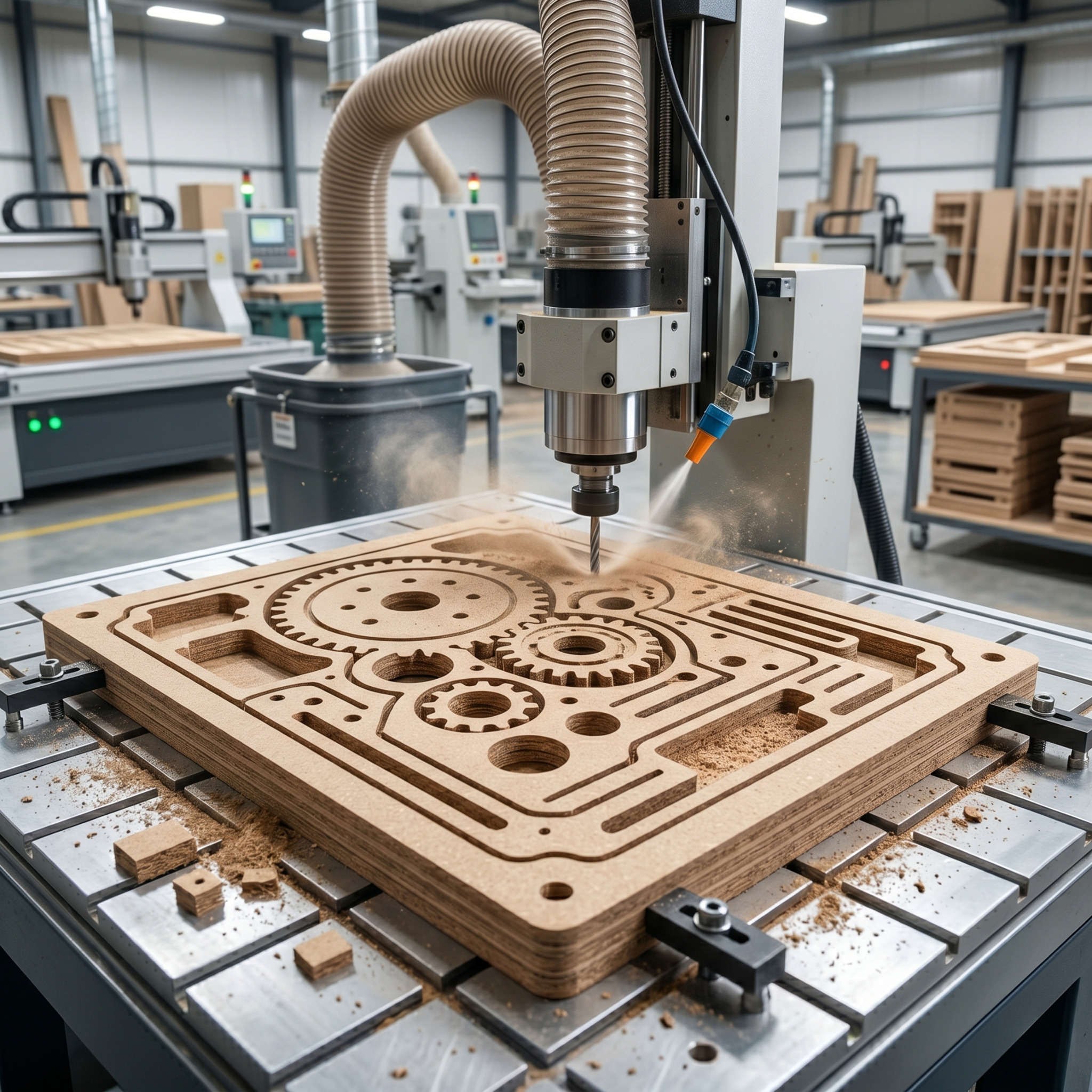
| Machinability | CNC routing, milling, slitting, die-cutting, turning |
| Standards | IEC 60641, VDE 0530 Part 1, IS specifications |
| Custom Availability | Custom thickness, custom sheet sizes, machined components to drawing |
What Is Calendered Pressboard?
Calendered pressboard is a dense, rigid sheet of cellulose insulation material manufactured specifically for electrical insulation applications in oil-filled transformers and high-voltage electrical equipment. It is produced by a specialised wet paper-making process — cellulose fibres from 100% sulfate (kraft) pulp are suspended in water, formed into sheets on a papermaking machine, and then calendered (passed through heavy polished rollers under high pressure while still damp) to achieve the target density, smooth surface finish, and uniform thickness that transformer OEMs require.
The word "calendered" is critical — it distinguishes this board from ordinary pressed cardboard or low-density insulation board. The calendering process compresses the fibre structure to achieve a density of 1.05 g/cm³, compared to uncalendered boards at 0.80–0.90 g/cm³. This higher density directly translates to better mechanical strength, improved dielectric properties, and the dimensional stability required for precision-machined transformer components.
Density: 1.05 g/cm³ — Why It Matters
Density is the single most important quality indicator for calendered pressboard. It is not just a physical measurement — it is a direct proxy for four critical engineering properties simultaneously:
ACC Insulations Calendered Pressboard — Standard Grade
- Dielectric strength — higher density means fewer and smaller inter-fibre air voids, which are the weak points in solid insulation where partial discharge initiates. Denser pressboard has higher withstand voltage per millimetre of thickness.
- Mechanical strength — the compressed fibre network has more contact points between fibres, giving higher tensile, compressive, and bending strength. This is what allows machined pressboard spacers to carry clamping loads without cracking or deforming.
- Oil impregnation rate — at density 1.05 g/cm³, the pressboard has sufficient pore structure to allow complete oil impregnation under vacuum within a practical processing time. Overly dense boards would impede oil penetration; underdense boards would absorb too quickly and trap air.
- Dimensional stability — denser pressboard swells less when oil-impregnated and maintains its dimensions more consistently under the combined effects of oil, heat, and mechanical load over the transformer's service life.
The Calendering Process — Step by Step
Understanding how calendered pressboard is made explains why its properties are fundamentally different from ordinary insulation board:
Sulfate Pulp Preparation
100% sulfate (kraft) cellulose pulp — selected for its long fibre length and purity — is pulped in water to a controlled consistency. Sulfate pulp is specified because the kraft process removes most lignin from the wood fibres, leaving highly pure, long cellulose fibres with superior mechanical strength and electrical properties compared to mechanical wood pulp.
Sheet Formation (Wet Laying)
The pulp slurry is evenly distributed across a continuous forming wire where water drains through, leaving a uniform wet cellulose mat. Layer thickness and basis weight are controlled at this stage to achieve the final target thickness after calendering.
Press Section — Initial Consolidation
The wet cellulose mat passes through a series of press nips where mechanical pressure removes the majority of remaining water and begins to consolidate the fibre network. Density starts building at this stage.
Calendering — High-Pressure Surface Finishing
The partially dried sheet passes through heavy polished steel calendering rollers under controlled high pressure. This is the defining step — the rollers compress the surface of the board to achieve the target density of 1.05 g/cm³, create the smooth surface finish that transformer winding machines require, and ensure uniform thickness across the full width of the sheet.
Controlled Drying
The calendered board is dried under controlled temperature and tension to remove residual moisture to the target level. Moisture content is critical — too high and dielectric properties are reduced; too low and the board becomes brittle and difficult to machine without cracking.
Sheet Cutting, Quality Inspection & Dispatch
Dried boards are cut to standard size (1070 × 1850 mm) or custom dimensions. Thickness, density, dielectric strength, and surface quality are verified before dispatch. Boards are packaged moisture-protected to prevent property degradation during storage and shipping.
Standard Thickness Range: 1 mm to 6 mm
Each thickness serves distinct functional roles in transformer insulation design. The correct thickness is selected based on the inter-layer voltage, required oil duct width, and mechanical load requirements:
Inter-layer barriers, slot cell liners
Winding spacers, thin barriers
Standard winding spacers, duct formers
Heavy spacers, end ring components
Structural blocks, barrier boards
Thick barriers, clamping components
Custom thicknesses within the manufacturing range are available on request. For thicknesses above 6 mm, we recommend pre-compressed pressboard which offers lower residual compressibility for structural applications.
Key Electrical & Mechanical Properties
Transformer Components Made from Calendered Pressboard
Calendered pressboard is the most versatile solid insulation material in oil-transformer design. It is machined and formed into a wide range of critical structural insulation components:
Winding Spacers & Duct Sticks
Precision-cut or machined strips placed between disc winding sections or layer winding turns to create defined oil circulation channels. The spacer height determines the oil duct width and directly controls cooling efficiency.
End Rings & End Collars
Flat rings machined from pressboard sheet that insulate and mechanically support the top and bottom end turns of transformer windings. They distribute clamping force evenly and protect end turns from damage during handling and assembly.
Barrier Boards
Large flat insulation panels providing the main electrical isolation between LV and HV windings, between phases, and between the winding and core. Their thickness is determined by the inter-winding voltage and insulation coordination requirements.
Phase Separators
Flat pressboard boards that provide phase-to-phase electrical isolation in three-phase transformer assemblies, preventing inter-phase flashover and defining creepage paths between phase terminals and leads.
Insulation Blocks & Angle Rings
Solid machined pressboard blocks used as supporting structures, corner insulation, and lead guide components within the transformer core-and-coil assembly. Machined to exact profiles per OEM drawings.
Lead Support & Clamping Components
Machined pressboard parts that mechanically support, route, and insulate LV and HV winding leads from the winding assembly to the transformer bushings or tap changer, providing both mechanical stability and required electrical clearances.
Calendered Pressboard vs. Pre-Compressed Pressboard
The most common specification question is when to use standard calendered pressboard versus pre-compressed pressboard. Here is a clear comparison:
| Property | Calendered Pressboard | Pre-Compressed Pressboard |
|---|---|---|
| Manufacturing method | Wet-laid, calendered (standard) | Wet-laid, calendered + mechanical pre-compression |
| Typical density | 1.05 g/cm³ | 1.20–1.30 g/cm³ |
| Residual compressibility under load | Moderate — will compress slightly under clamping load | Very low — near zero residual compression |
| Dimensional stability in oil | Good | Excellent — minimal oil swell |
| Dielectric strength | High | Higher — denser structure |
| Best applications | Winding spacers, duct formers, barrier boards, end rings, general insulation | Press rings, clamping rings, end support blocks, high-load structural components |
| Cost | Standard | Higher |
Both calendered and pre-compressed pressboard grades are available from ACC Insulations. See our Pre-Compressed Pressboards and High Density Pre-Compressed Pressboards pages for the higher-density grades.
Why Pressboard Is Irreplaceable in Oil Transformer Design
Cellulose pressboard has been used in oil-filled transformers for over 100 years — and despite decades of composite material development, no synthetic material has displaced it in oil-immersed transformer design. The reason is a unique combination of properties that only natural cellulose provides in oil:
- Cellulose–oil synergy: Cellulose fibres and mineral oil form a natural insulation system where the two materials are chemically compatible. Oil completely impregnates the cellulose pore structure under vacuum, eliminating residual air voids and achieving the full dielectric strength of the combined system — which is significantly higher than either material alone.
- Mechanical load transmission: Pressboard winding spacers carry the full axial clamping preload applied to transformer windings — typically several tonnes in a large power transformer. Cellulose pressboard creeps gradually under sustained load, which actually helps the winding self-consolidate during the initial oil-filling and service period. This controlled creep distributes clamping force evenly across all spacers without sudden load concentration.
- Thermal aging synergy: In oil-filled transformers, pressboard and oil age together through a compatible chemical process. The transformer oil contains antioxidants that also protect the cellulose from oxidative degradation. Monitoring the degree of polymerisation (DP) of the pressboard has become the primary method for assessing remaining transformer life in service.
- Short-circuit electromagnetic force resistance: During a transformer short circuit, massive radial and axial electromagnetic forces act on the winding assembly. Pressboard spacers and structural components carry these loads mechanically. Their ability to deform slightly without fracture under impulse loads — absorbing energy plastically — provides better short-circuit withstand than brittle synthetic materials in many designs.
Applications — Transformer & Equipment Types Served
Quality Control & Standards Compliance
Every batch of calendered pressboard manufactured by ACC Insulations is produced under a controlled quality protocol and verified before dispatch:
- Raw material qualification — only 100% sulfate cellulose pulp from qualified sources, verified for fibre purity, length distribution, and freedom from impurities that could affect electrical properties
- Thickness measurement — measured at multiple points across the sheet to verify conformance to tolerance; non-uniform sheets rejected
- Density verification — measured on representative samples; only sheets meeting the 1.05 g/cm³ target (±tolerance) are released
- Dielectric strength testing — withstand voltage test per IEC 60641 on sample basis; verified to rated Class A (105°C) performance
- Moisture content control — moisture content measured and verified within specification; boards packaged moisture-protected immediately after testing
- Visual and surface quality — sheets inspected for surface defects, inclusions, delamination, uneven calendering, or surface cracks before packaging
Standards compliance: IEC 60641 (pressboard and paper for electrical purposes), VDE 0530 Part 1 (Insulation Class A, 105°C), and relevant IS specifications for transformer-grade pressboard.
Why Choose ACC Insulations for Calendered Pressboard?
Specialist Components Manufacturer & Distributor
We manufacture and distribute only electrical insulation components — not a general distributor. Every calendered pressboard sheet is produced and quality-inspected under our direct control.
Custom Machining & Fabrication
We supply standard sheets and CNC-machined transformer components cut to your exact drawings — spacers, end rings, barrier boards, angle rings, and lead supports.
IEC & IS Compliant
All calendered pressboard meets IEC 60641, VDE 0530, and IS specifications. Material certificates and batch test records provided on request.
Full Pressboard Range
We stock calendered, pre-compressed, and high-density pre-compressed pressboards — all from one supplier with one quality system and one point of contact.
Reliable Supply & Delivery
Consistent production scheduling and controlled inventory ensure reliable on-time delivery to transformer OEMs aligned with your production calendar. Components manufacturer and distributor — not just a trader.
Technical Support
Our team assists with thickness selection, grade specification (calendered vs. pre-compressed), machining feasibility review, and IEC compliance documentation.
Engineering Tools Suite
Calculate pressboard thickness requirements, dielectric clearances, winding spacer dimensions, and oil duct widths for your transformer insulation design using our interactive engineering tools.
Frequently Asked Questions
Calendered pressboard is the primary solid cellulose insulation material inside oil-filled power and distribution transformers. Its main applications include winding spacers (creating oil duct gaps between disc winding sections), end rings (insulating and clamping winding ends), barrier boards (phase-to-phase and LV-to-HV electrical isolation), cylindrical insulation barriers (separating LV from HV windings), and lead support insulators. It also provides structural support — absorbing clamping preload and resisting short-circuit electromagnetic forces across the transformer's 30–40 year service life.
Calendered pressboard (density ~1.05 g/cm³) is the standard grade manufactured by wet-laying cellulose fibres and calendering to achieve density and surface finish. It has moderate residual compressibility — it will compress slightly under sustained clamping load, which is actually beneficial for most winding spacer applications as it allows the winding to self-consolidate. Pre-compressed pressboard (density 1.20–1.30 g/cm³) is additionally mechanically compressed during manufacture to reduce residual compressibility to near zero. Pre-compressed grades are specified for press rings, clamping rings, and structural end blocks where any long-term dimensional change under load would release winding clamping preload and risk winding movement during short circuits.
Yes — calendered pressboard is specifically designed for oil-filled transformers. The 100% sulfate cellulose base material has complete compatibility with mineral transformer oil. During vacuum oil impregnation, the oil penetrates the cellulose pore structure, displaces residual air, and bonds to the cellulose fibres — creating the classic cellulose–oil insulation system that achieves rated dielectric strength. The combination of cellulose pressboard and transformer oil has been the foundation of oil-filled transformer insulation design for over 100 years and remains the standard today.
We supply calendered pressboard in standard thicknesses from 1 mm to 6 mm. Standard sheet size is 1070 × 1850 mm. Custom sheet sizes and custom thicknesses within the manufacturing range are available. We also supply CNC-machined components cut from pressboard sheets — winding spacers, end rings, barrier boards, insulation blocks, and lead support components — machined to your exact engineering drawings. For components requiring thicknesses above 6 mm with minimal compressibility, we recommend our pre-compressed pressboard grades.
Yes. Calendered pressboard machines very well using CNC routing, milling, slitting, die-cutting, and turning. It cuts cleanly without delamination when correct tooling and feed rates are used. ACC Insulations supplies both standard sheets and precision-machined transformer insulation components including winding spacers, end rings, barrier boards, phase separators, cylindrical insulation rings, lead support blocks, and custom structural components — all machined to customer drawings and dimensionally verified before dispatch.
ACC Insulations' calendered pressboard has a density of 1.05 g/cm³. Density is the most critical quality parameter for pressboard because it simultaneously indicates four key properties: dielectric strength (denser = fewer voids = higher withstand voltage), mechanical strength (denser fibre network = higher load capacity), oil impregnation characteristics (correct density ensures complete vacuum impregnation in practical processing time), and dimensional stability (denser board swells less in oil and maintains dimensions better under sustained load). This is why IEC 60641 specifies density as a primary quality criterion for transformer-grade pressboard.
ACC Insulations' calendered pressboards comply with IEC 60641 (pressboard and paper for electrical purposes — Part 1: Definitions and general requirements), VDE 0530 Part 1 (Insulation Class A, 105°C thermal classification), and IS specifications for transformer-grade pressboard. Batch material certificates and test records are available on request. We also supply to customer-specific technical requirements derived from these standards when OEM documentation requires it.
Request a Quote
Get pricing & datasheet within 24 hours